Hybrid Tea rose

90-176-1
90-176-2

Cyelene

Hybrid tea rose

Keizimba – Keisei Rose Nursery

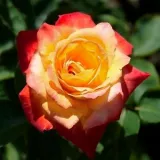
Petals butter‑yellow at the centre, becoming vivid orange towards the edges and then turning scarlet red. - hybrid tea rose - very weak, barely detectable scented rose - delicate, elegant, rose character

Cyelene le bláthanna bicolour bríomhara
– Athbhláthú maith le dara borradh flúirseach
– Tor dlúth, forásach le duilliúr dorcha
– Friotaíocht mhaith le míldew agus dubh‑spota
– Crua go dtí thart ar –21 °C, iontaofa
Gné speisialta: roisíní beaga oráiste‑dearga maisiúla sa fhómhar.
Peaceful garden experience – Climate-conscious choice
Cyelene
antoniaROSE® ORIGINAL rós i bpota 2 lítear ar a fhréamhacha féin
20,60 €
As stoc. Faoi shaothrú. Go sealadach gan fáil.
5 (6697)
facebook   twitter

CYELENE – orange-yellow hybrid tea rose

Let Cyelene bring gentle, glowing colour to your Irish garden, its bicolour blooms shifting from butter-yellow to warm sunset tones that soften into pastel coral as they age. This compact, bushy rose fits beautifully into a cottage-style border or a neat city-front setting, thriving even where moisture and heavier soils demand good drainage against lingering rain and slow-drying ground. Own-root plants quietly build strength over time – roots in year one, top growth in year two, then full ornamental value by year three – so your planting becomes more stable, long-lived and forgiving of the odd setback. With a good repeat-flowering habit, medium maintenance level and solid disease resistance, Cyelene rewards simple, regular care rather than expert fussing. Semi-double, high-centred blooms give a light, refined rose scent, adding a touch of elegance to everyday walks to the front gate. Ideal for compact borders, low hedges or larger containers, it offers an easy route to a soft, romantic look without demanding constant attention in a busy family garden.


Usage options

Target area Reasoning
Small front garden border in a Dublin terrace Cyelene’s compact, bushy habit and medium height make it ideal where space is tight but you still want a classic hybrid tea presence by the path. Its changing orange-yellow to pastel tones bring day-to-day visual interest for passers-by and householders alike, suiting time-pressed city gardeners who enjoy gentle elegance, beginners.
Cottage-style mixed border in a family garden The warm butter-yellow, orange and red shades blend beautifully with cottage perennials such as lavender and thread-leaved coreopsis, creating a “girly”, romantic feel without becoming garish. Good repeat-flowering keeps colour going through a short Irish summer, supporting those who prefer relaxed charm to high-maintenance perfection, hobby-gardeners.
Low flowering hedge along a drive or garden path With recommended spacings of 40–50 cm and dense, dark green foliage, Cyelene forms a tidy, flower-studded hedge that visually softens hard edges. Its semi-double, high-centred blooms look refined from both sides of a path, offering a welcoming feel for visitors and everyday family use alike, homeowners.
Feature rose in a large patio container Planted singly in a 40–50 litre pot with good drainage, Cyelene provides a structured, upright accent near a doorway or seating area. Its moderate maintenance needs and own-root resilience make it forgiving in containers, where watering can fluctuate, appealing to busy urban residents who want impact with limited effort, city-dwellers.
Rain-resilient planting in heavier Irish soils In many Irish gardens where rain lingers and heavier soils hold moisture, Cyelene’s moderate disease resistance to black spot and powdery mildew becomes a practical advantage. With improved drainage and a light mulch, it will keep its foliage attractive and functional, reassuring those in wetter regions who fear constant spraying, climate-conscious.
Long-term, low-fuss family planting scheme The own-root nature of the pharmaROSA ORIGINAL plant means no graft line to worry about and better recovery from accidental knocks or pruning errors. As the shrub matures, it offers stable shape and colour for years, suiting families who want reliable structure around swings, lawns and patios rather than high-precision rose beds, families.
Lightly scented seating-area companion Cyelene’s very delicate fragrance is noticeable only at close range, so it complements seating areas where you prefer a subtle rose note rather than a heady perfume. This makes it particularly suitable near windows or doorways where strong scent might be overwhelming, ideal for fragrance-sensitive yet rose-loving gardeners, scent-gentle.
Wildlife-friendly, softly structured borders Semi-double flowers offer moderate interest to pollinators, while the plant’s moderate crop of small, orange-red hips adds an autumn food source and visual detail. Used with other pollinator-rich plants, Cyelene helps round out a more nature-friendly border without sacrificing refinement for the human eye, nature-lovers.

Styling ideas

  • Cottage-Romantic – Combine Cyelene with dwarf lavender and thread-leaved coreopsis for a pastel, skirt-like edging that repeats flower through summer – ideal for cottage-style front gardens.
  • Sunset-Focus – Plant three Cyelene in a triangle as a compact focal group, underplanted with low catmint to mirror the warm-orange blooms – suited to small suburban lawns.
  • Soft-Hedge – Create a low hedge along a path with Cyelene at 40–45 cm spacing, weaving in evergreen dwarf honeysuckle for year-round structure – perfect for practical, family-friendly frontages.
  • Patio-Glow – Grow a single Cyelene in a 50 litre terracotta pot, with trailing thyme at the rim, to bring mobile colour to a sheltered terrace – great for renters or balcony gardeners.
  • Pastel-Drift – Mix Cyelene through a border of airy grasses and pale perennials so its ageing pastel blooms soften into a hazy drift – appealing to those who like naturalistic, low-fuss planting.

Technical cultivar profile
Property Data
Name and registration Cyelene hybrid tea rose (Rós taehibride), trade name Cyelene. Hybrid Tea group, high-centred, cut-rose style blooms. Registered cultivar name not recorded; exhibition name data currently unavailable.
Origin and breeding Bred by Keisei Rose Nursery in Japan, breeding year 2007. Parentage is not documented. Introduced to the market by Keisei Rose Nurseries, Inc. with later distribution for garden use in Europe.
Growth and structural characteristics Bushy shrub reaching about 85–115 cm in height with a 60–80 cm spread. Dark green, moderately glossy foliage with good density. Moderately thorny stems; overall growth suited to borders, hedging and larger containers.
Flower morphology Semi-double blooms with approximately 13–25 petals. Medium flower size, around 4–7 cm across, typically produced singly on stems. High-centred, pointed buds give a classic hybrid tea form suited to cutting and formal displays.
Colour data and phenology Bicolour effect with butter-yellow centres shifting to vivid orange and scarlet red edges (RHS 24A–24B). Colour softens to pink-coral and creamy yellow as blooms age, reading more pastel overall. Moderate colour retention under garden conditions.
Fragrance and aroma Fragrance is very weak, described as a delicate, elegant rose character. Scent is usually perceptible only at close range, making it suitable for entrances and windows where a subdued perfume is preferred over strong aroma.
Hip characteristics Produces ellipsoid orange-red hips, about 8–12 mm in diameter, in moderate quantities. Hips add a subtle decorative and wildlife-supporting feature in late season when flowers lessen, especially in mixed or naturalistic borders.
Resistance and winter hardiness Moderate overall disease resistance, with good resistance to powdery mildew and black spot, and moderate susceptibility to rust. Hardy approximately to −21 to −18 °C (RHS H7, USDA zone 6b), suitable for most Irish garden conditions.
Horticultural recommendations Medium maintenance needs; occasional plant protection may be useful in high-rust areas. Recommended spacing: 40–50 cm for hedges, 75 cm as specimen, about 4–5 plants per m² in mass planting. Prefers well-drained soil with mulch to protect roots.

CYELENE – orange-yellow hybrid tea rose offers long-season colour, reliable repeat flowering and compact structure in an own-root form that matures into a steady garden feature; a thoughtful choice if you favour lasting beauty with modest care.
Detailed product attributes

Product Identification Data

Product Name: CYELENE – orange-yellow hybrid tea rose - Nursery
Product Type: antoniaROSE® ORIGINAL - rós i bpota 2 lítear ar a fhréamhacha féin
Cultivar Authenticity: Cigireáilte:28.09.2025
Cultivar Merit Rating: premium gold
Item Number: [1526] 90-176 (14.02.2026) antoniarose.ie

Name and Registration

Trade Name: Cyelene Hybrid tea rose Nursery
Rose Group: Hybrid Tea
Commercial Type: hybrid tea rose
Commercial Group: Rós taehibride
Collection: Hybrid tea rose

Origin and Breeding

Initial Distributor: Keisei Rose Nurseries, Inc. (Japan)
Year of Introduction: Data not available
Registration Year: Data not available
Breeder: Keisei Rose Nursery
Breeding Company / Institution: Keisei Rose Nurseries, Inc (Japan)
Breeding Year: Japan, 2007
Parentage: unknown

Growth and Structural Characteristics

Height: 85-115 cm
Spread: 60-80 cm
Growth Habit: bushy
Foliage: The variety has dense foliage; the leaves have a slightly glossy surface and a dark green shade (RHS 139A).
Prickliness: moderately thorny
Self-Cleaning Description: No information is available on self-cleaning.
Self-Cleaning Intensity: No data on self-cleaning strength.

Flower Morphology

Petal Count: 13-25
Flower Fullness: semi-double flowered
Flower Form: high-centred, pointed-budded (cut-rose type)
Flower Size: M (4 -7 cm)
Inflorescence Type: solitary
Colour Code: ARS code: OB RHS code: 24A (outer), 24B (inner)
Repeat Flowering: It is a good repeat-flowering variety, with an abundant second flush.

Colour Data and Phenology

Colour: orange-yellow
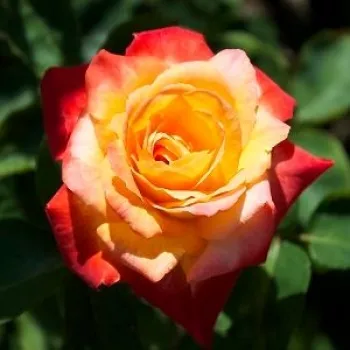
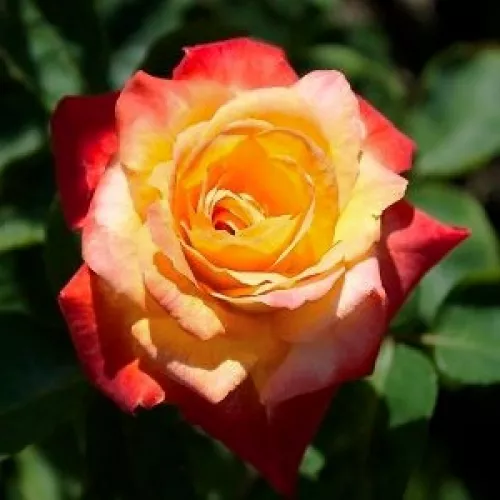
Flower Colour: Petals butter‑yellow at the centre, becoming vivid orange towards the edges and then turning scarlet red.
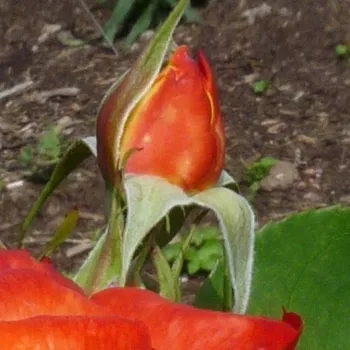
Closed Bud: Deep mid-orange, with a vivid scarlet-red rim on the outer petals and a subtle yellowish sheen.
Freshly Opened Flower: Petals with a golden–buttery centre, intensifying to bright orange towards the outer edges and then to scarlet red, with a pronounced bicolour transition.
Full Bloom: Predominantly red-edged, with a strong golden–lemon-yellow halo, and the edges of the outer petal whorl are occasionally coral-pink.
Pre-Fading Flower: The red edge softens and fades to pink‑coral, the yellow centre becomes creamier, and the overall effect is gentler and more pastel.
Colour Fading Description: As the flower opens, the red rim gradually fades to a pink–coral, the yellow centre becomes creamier; the overall effect is more pastel by the end.

Fragrance and Aroma

Fragrance Strength: very weak, barely detectable scented rose
Fragrance Character: delicate, elegant, rose character
Pollinator Attraction: Semi-double (13–25 petals) blooms offer only moderate attractiveness to pollinators because the semi-double form partially conceals the stamens, reducing pollen and nectar accessibility.
Pollinator-Friendly Rating: The descriptions do not specifically list it as pollinator-friendly.

Rose Hip Characteristics

Rose Hip Shape: ellipsoid-shaped
Rose Hip Colour: orange-red
Rose Hip Notes: Produced in moderate quantities, the rose hips are ellipsoid, 8–12 mm in diameter and orange-red.

Resistance and Hardiness

Hardiness (°C): -21–-18 °C
Heat and Drought Tolerance Description: No data are available on heat–drought tolerance.
Disease Resistance: moderate
  • powdery mildew – resistant
  • black spot – resistant
  • rust – moderate

Horticultural Recommendations

Recommended Spacing: for mass planting 50 cm, for hedging 40 cm, as a specimen plant 75 cm
Planting Density: square planting 4,2 plants/m², hexagonal arrangement 4,8 plants/m²
Maintenance Requirements: Maintenance requirement medium; resistant to powdery mildew and black spot, moderately susceptible to rust, therefore occasional plant protection is recommended.
Key Uses: no data

Notes

Strengths: Peaceful garden experience – Climate-conscious choice
Companion Plants: Coreopsis verticillata - thread-leaved coreopsis
Lonicera pileata - evergreen groundcover dwarf honeysuckle
Lavandula angustifolia (low-growing varieties) - dwarf lavender
Note: -
CYELENE – orange-yellow hybrid tea rose - Nursery
Petals butter‑yellow at the centre, becoming vivid orange towards the edges and then turning scarlet red. - hybrid tea rose - very weak, barely detectable scented rose - delicate, elegant, rose character
Ordú rósanna ar líne - hybrid tea rose - Cyelene - orange-yellow - (85-115 cm)
Bláthaireacht: solitary airde: 85-115 cm Cruth na bláthanna: high-centred, pointed-budded (cut-rose type) Friotaíocht gheimhridh: 6b orange-yellow - Keisei Rose Nurseries, Inc. (Japan) hybrid tea rose - Méid an bhlátha: M (4 -7 cm) Méid an bhlátha: M (4 -7 cm) - airde: 85-115 cm airde: 85-115 cm - Líon bláthanna: semi-double flowered Cyelene - Rósanna sa ghairdín | antoniaROSE® Original - premium gold Keisei Rose Nursery

Léirímid cuma sheachtrach ár rósanna atá le ceannach ar líne ónár siopa gréasáin.


Which product type is right for you?


Information

In what condition do we send the roses from our online shop?

Let us ask ourselves the question: What do I want to use the rose for?
Flower? – Location? – Screening? – Fragrance? – Height? – Breeder? – Rose hips?

Rose purchase information
Payment methods – Delivery costs – Delivery – Complaints handling

Care guide

Our product is a rose grown with unique pharmaROSA® cultivation technology!

2 litre, own-root, potted rose.
With shoots appropriate to the season.
With roots thoroughly interwoven through the growing medium.
Quality in line with the requirements of the E.N.A. (European Nurserystock Association).
In unique packaging that prevents damage.
Can be planted during frost-free periods.
True-to-type rose plant with an individual identifier.

The pharmaROSA® own-root potted rose is a well-rooted plant that supports reliable establishment when planted and cared for properly, so it can be planted whenever the soil is not frozen.


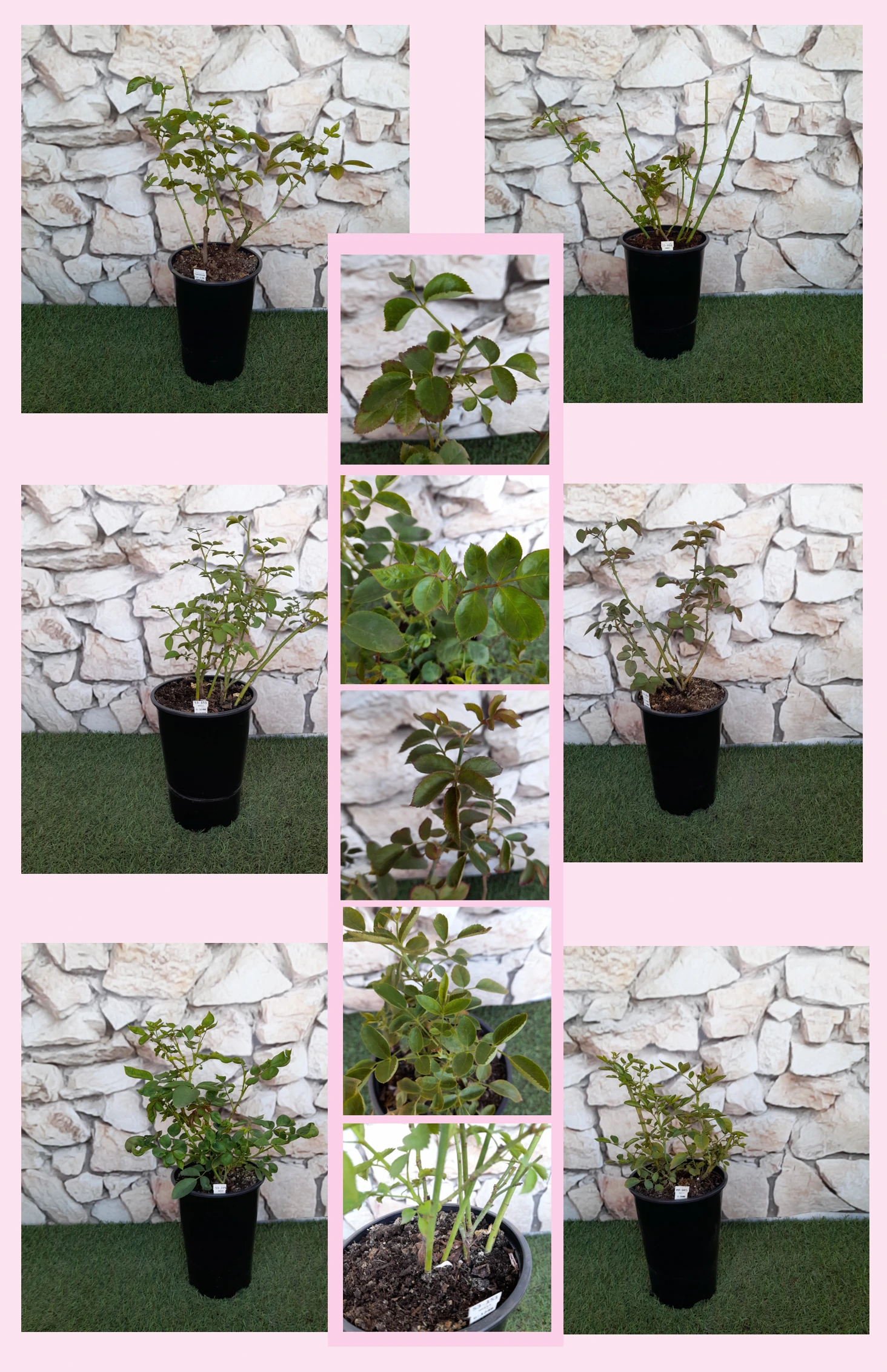
Stock: several varieties and several stages of development in a short stock section.
Shoot system: intensive growth of fresh basal shoots on a young plant.
Root system: presentation of the strong root system interwoven through the growing medium with the pot removed.
Balance: mature plant where the development of the root system and the shoots is in harmony.

Information about the videos
The video series is not a “seasonal showcase”, but makes the essence of pharmaROSA® own-root production tangible: how the plant is built, what the root system is like and how the shoots renew themselves. The footage was therefore taken at different times, showing plants at different stages of development, so mixed leaf coverage or differing growth stages may appear in the videos. This is not a “sample” of the batch delivered, but an illustration of how the technology works. The current condition of the rose available to order — typical of the given period and similar to what you can expect to receive in the parcel — is shown at the top of the product page.

pharmarosa.atpharmarosa.compharmarosa.depharmarosa.ropharmarosa.sipharmarosa.skpharmarosa.hrpharmarosa.itpharmarosa.frpharmarosa.grpharmarosa.bepharmarosa.dkpharmarosa.nlpharmarosa.iepharmarosa.plpharmarosa.lupharmarosa.ptpharmarosa.espharmarosa.bgpharmarosa.ltpharmarosa.sepharmarosa.lvpharmarosa.eepharmarosa.fipharmarosa.rudarinarose.co.ukpharmarosa.cz

Cineálacha táirgí

Pages for private customers
Garden roses for the family garden, with minimal care  → ORIGINAL®
Premium garden roses – instant impact, a truly showpiece garden  → EXTRA®
Pages for professionals and private customers
Roses for public spaces – large areas, sustainable maintenance  → NATURAL®
Roses for projects – hedge and row planting, fast implementation  → RAPID®
For professional partners only
Production – propagation material for garden roses, wholesale  → NEONATAL®

Sonraí cuideachta

PharmaRosa Ltd.
Company registration number: 01-09-717479
VAT number: 13075314-2-43
Plant health registration no.: HU130721
Bank account (IBAN):
HU85117631891388688400000000
BIC (SWIFT): OTPVHUHB
Bank name: OTP Bank Nyrt.