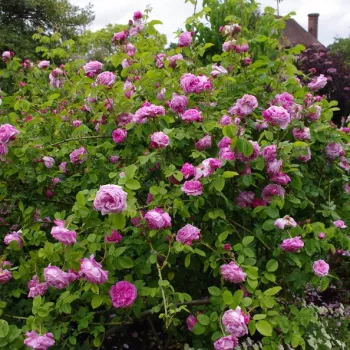
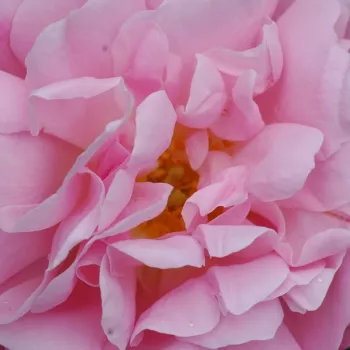
COUPE D’HÉBÉ – pink historic Bourbon rose - Laffay
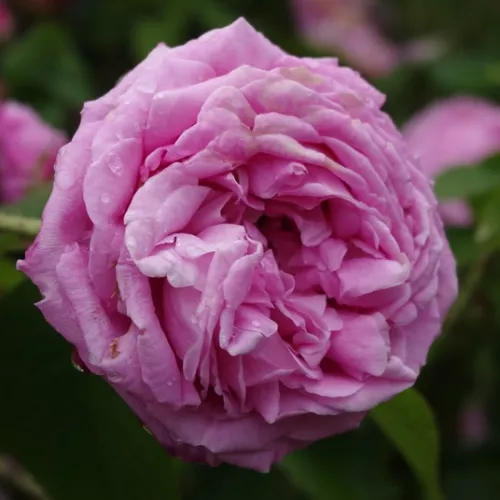
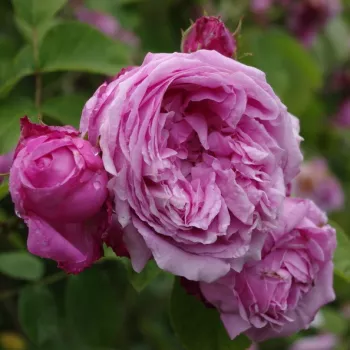
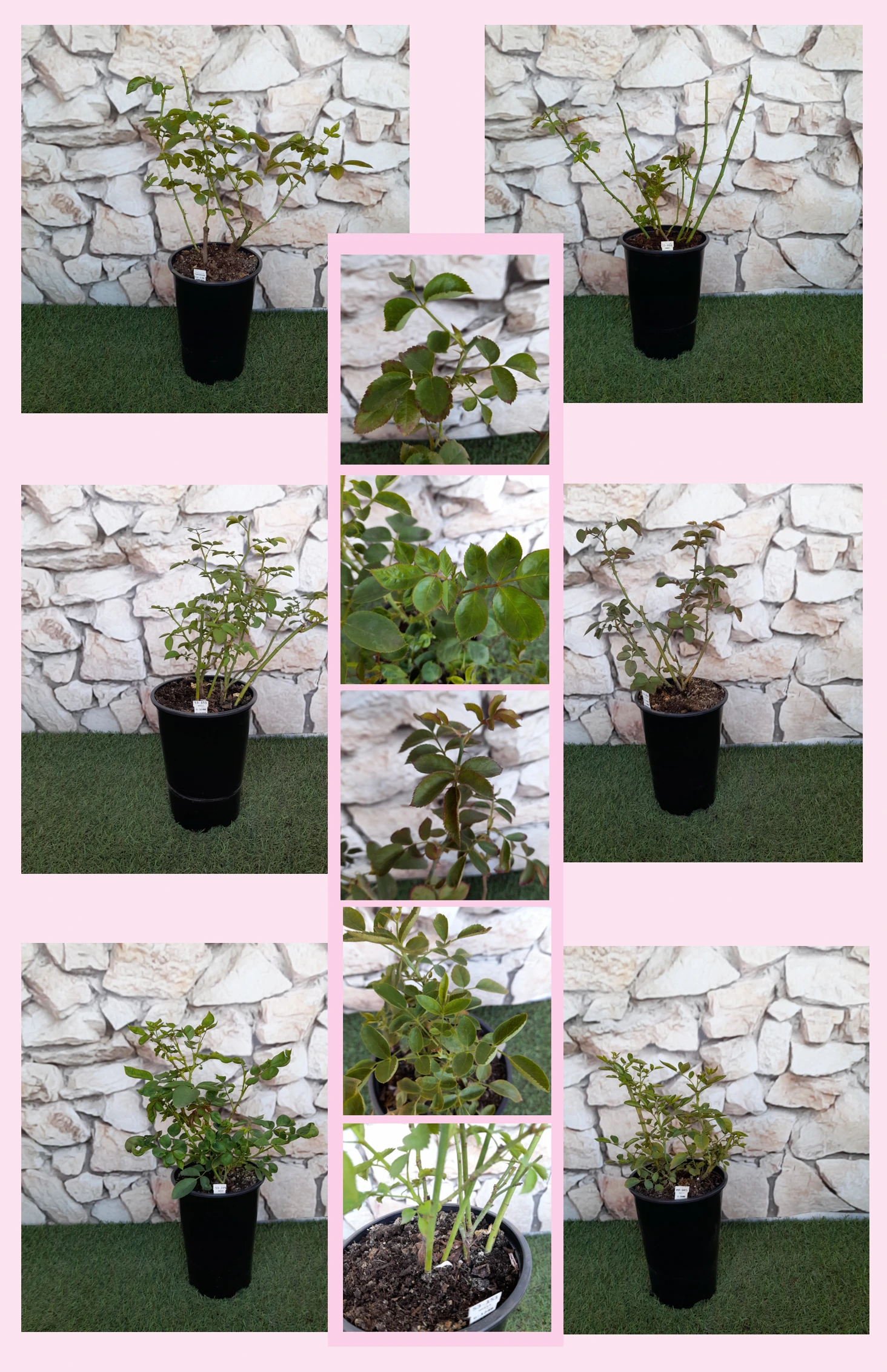
Step out to your front door after rain and meet Coupe d’Hébé glowing in soft pink, its cottage charm perfectly at home in a Dublin terrace or country lane. This tall, gently arching Bourbon-climber brings romantic clusters of cupped, shell-pink blooms with a famously fragrant old-rose perfume that lingers in the damp air. Bred in France in the 1840s yet still cherished today, it offers reassuring hardiness and disease resistance for Irish gardens where breezes off the sea and frequent showers meet mild summers and a need for roses that cope gracefully. Planted on its own roots in the pharmaROSA® ORIGINAL 2‑litre pot, it settles in steadily and rewards you as roots, then shoots, then full garden presence build over the first three years, giving a long-lived, regenerating heritage feature with only modest care.
Usage options
| Target area |
Reasoning |
| Cottage-style front wall or railings |
Its tall, climbing habit and arching, flower-laden stems create a storybook cottage look along low walls, railings or around a doorway, without needing a full pergola structure; ideal for romance-seeking beginners |
| Fragrant seating corner |
The very strong, classic rose scent carries on still evenings, so one plant near a bench or back step fills the air with perfume, giving high sensory reward from a single shrub for busy homeowners |
| Feature in small to medium family garden |
With a height of about 2–3 m and 1,2–2 m spread, it makes a vertical focal point that does not eat all the ground space, bringing long-season colour and structure for space-conscious gardeners |
| Irish cottage or Dublin terrace frontage |
The soft pink flowers and slightly glossy light-green foliage sit beautifully against brick, pebble-dash or painted walls, softening hard lines to give a gentle, lived-in charm for urban romantics |
| Low-effort historic rose collection |
Medium disease resistance, particularly to black spot and powdery mildew, means fewer sprays and simpler care, while own-root plants recover well from setbacks, suiting time-poor enthusiasts |
| Long-lasting family planting |
As an own-root heritage shrub it is not dependent on a graft union, so it can live and perform for many years, regenerating from the base and holding ornamental value for long-term planners |
| Mixed flower border with perennials |
Recommended spacings around 1–1,65 m allow you to weave in perennials such as asters and liatris, while its remontant flowering brings repeat flushes through short Irish summers; perfect for border stylists |
| Large container by a sunny wall |
Given a well-drained container of at least 40–50 litres and regular watering, it will climb and flower reliably, making it a practical choice where soil is poor or paved over for balcony-balconette owners |
Styling ideas
- Cottage-archway – Train Coupe d’Hébé over a simple wooden arch with aubrieta tumbling at the base for a soft, storybook entrance – for lovers of romantic gateways
- Pastel-partner – Pair its shell-pink blooms with white liatris and pale campanulas in a narrow border to create a gentle, luminous scheme – for fans of calm, light gardens
- Fragrant-nook – Place a bench against a sunny wall and let the rose frame it, adding night-scented stocks below for layered perfume – for evening relaxers
- Heritage-row – Space several plants about 1 m apart along a fence to form a loose, flowering screen that hints at old walled gardens – for history-minded growers
- Container-column – Grow it in a 50-litre pot with a slim obelisk, underplanting with dwarf asters to hide the container rim – for terrace and patio dwellers
Technical cultivar profile
| Parameter |
Data |
| Name and registration |
Coupe d’Hébé is a historic Bourbon shrub and garden rose marketed as a heritage variety; trade name Coupe d’Hébé Heritage rose Laffay, unregistered but recognised in collections. |
| Origin and breeding |
Bred in France around 1840 by Jean Laffay from a Bourbon rose crossed with a Rosa chinensis hybrid; first distributed from Camden Park, Australia, and introduced in 1850. |
| Growth and structural characteristics |
Strong, climbing to tall shrub habit, typically 200–300 cm high and 120–200 cm wide, with dense, slightly glossy light-green foliage and plentiful prickles along vigorous shoots. |
| Flower morphology |
Medium-sized, cupped, double blooms with approximately 26–39 petals, usually borne singly; remontant with a generous first flush and a lighter repeat flowering later in the season. |
| Colour data and phenology |
Closed buds are deep purplish pink; fresh flowers rich mid-pink, fading to shell-pink with outer petals soft mauve-rose, corresponding to RHS 68C outer and 68D inner colour codes. |
| Fragrance and aroma |
Very strongly scented rose with a classic old-rose perfume that is noticeable at some distance, particularly in still, humid air, making it ideal for scented gardens and seating areas. |
| Hip characteristics |
Occasional spherical hips 15–22 mm in diameter, maturing to an orange shade; ornamental rather than prolific, and generally of minor impact compared with its strong flowering display. |
| Resistance and winter hardiness |
Hardy to approximately −26 to −23 °C (RHS H7, USDA 5b); good resistance to powdery mildew and black spot, moderate rust susceptibility, requiring only occasional targeted pest management. |
| Horticultural recommendations |
Best in fertile, well-drained soil with support for climbing growth; suitable for partial shade, hedging or specimen use, and responds well to deadheading and light pruning after flowering. |
Coupe d’Hébé offers richly scented blooms, romantic height and reliable hardiness on a long-lived own-root shrub, making it a thoughtful choice if you want enduring charm with manageable care.