CORNELIA – peach-pink park rose - Pemberton
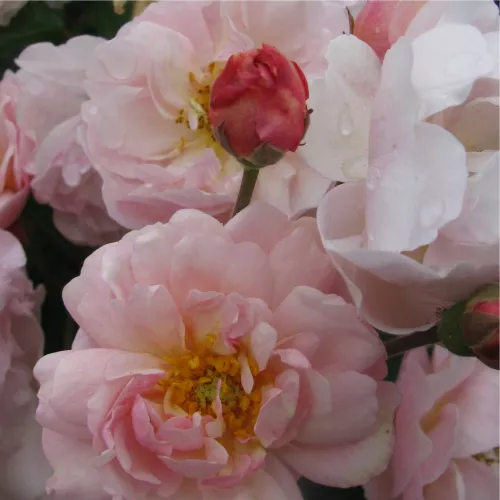
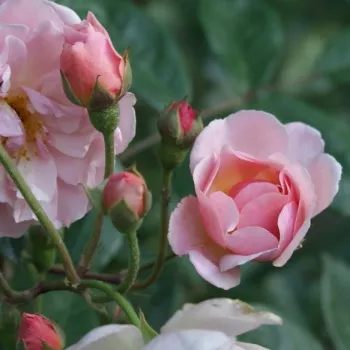
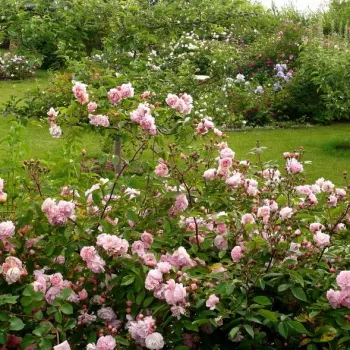
Step outside for a few calm minutes and let ‘Cornelia’ wrap your small Irish garden in peach light and a gentle, sweetly musky fragrance. This classic Hybrid Musk shrub rose flowers in generous clusters that repeat through the season, offering a long display even in summers that feel all too short. Its bushy, slightly arching growth is ideal beside a low wall or cottage path, where the soft, peach‑pink blooms and golden stamens glow against dark, glossy foliage. On its own roots, ‘Cornelia’ settles in reliably over the years, quietly regenerating and building a steady framework of shoots. With good drainage to ease heavy Irish clay after steady rainfall, it copes well in typical family gardens, needing only moderate pruning and watering to reward you with a long‑lived, romantic presence.
Usage options
| Target area | Reasoning |
|---|
| Front garden feature shrub |
Cornelia’s upright, slightly arching habit and medium stature make it ideal as a welcoming feature by the gate or front door, giving a cottage feel without overwhelming smaller plots in town terraces, especially for the beginner. |
| Romantic, long-flowering cottage border |
Repeated flushes of peach‑pink rosettes keep borders lively well into autumn, so even with a shorter Irish summer you enjoy colour for months, with only moderate deadheading and pruning needed, suiting the busy. |
| Lightly scented seating area |
The strong, sweetly musky fragrance drifts beautifully around a small patio or bench, giving evening walks in soft rain a nostalgic, calming air without needing intensive care, perfect for the fragrance‑loving homeowner. |
| Informal flowering hedge |
Planted at the recommended hedge spacing, Cornelia knits into a softly arching, sparsely thorned barrier that blends privacy with romance, while own‑root durability supports a long‑lived line of shrubs for the practical family. |
| Wall or low pergola training |
The flexible, slightly arching canes can be fanned along a wall or light pergola, creating cascades of clustered blooms with modest tying in, bringing vertical softness that suits space‑conscious urban gardeners. |
| Part-shade side garden planting |
Suitable for partial shade, Cornelia still flowers well in those side‑return strips between houses where sun is limited but humidity and fungal pressure can be higher, making it a forgiving choice for coastal‑belt owners. |
| Low-maintenance, long-lived specimen |
As an own‑root shrub, Cornelia builds strength slowly and can rejuvenate from the base after hard pruning or winter damage, giving many years of reliable structure with moderate upkeep for the long‑term‑thinking gardener. |
| Larger container or courtyard pot |
In a 40–50 litre container with good drainage, Cornelia offers a mobile focal point of fragrant, clustered blooms near doors or seating, with simple watering and yearly pruning suiting the compact spaces of urban residents. |
Styling ideas
- Cottage-Front Charm – Underplant Cornelia with foxgloves and honesty for a soft, “girly” cottage look by a low wall or railing – ideal for terrace-front romantics.
- Perfumed Seating Nook – Place a specimen near a bench with lavender and feverfew to catch the musky scent on damp evenings – perfect for evening coffee lovers.
- Soft Hedge Line – Create an informal hedge, weaving Cornelia with herbaceous geraniums at the base for a gentle, family‑friendly boundary – suited to family‑garden owners.
- Wall-Fall Rosettes – Fan stems along a sunny wall, interplanting with clematis for layered bloom and colour depth – for design‑conscious urban gardeners.
- Container Focus – Grow one plant in a 50‑litre clay pot with trailing thyme and violas around the rim – attractive for balcony and courtyard dwellers.
Technical cultivar profile
| Parameter | Data |
|---|
| Name and registration |
Cornelia is a park shrub rose, Hybrid Musk group, sold as a premium bronze cultivar; an historic shrub type with ARS exhibition name Cornelia, unregistered but well established. |
| Origin and breeding |
Bred by Joseph Hardwick Pemberton in Romford, Essex, United Kingdom, and introduced by The Pemberton Nursery in 1925, this classic Hybrid Musk reflects early twentieth‑century English garden style. |
| Awards and recognition |
Recognised with the Royal Horticultural Society Award of Garden Merit in 1993, confirming garden reliability, ornamental value and performance under typical amateur conditions across a range of climates. |
| Growth and structural characteristics |
Forms an upright, slightly arching, bushy shrub 120–180 cm high and wide, with dense, glossy dark green foliage and relatively sparse prickles, giving a romantic yet manageable structure in family gardens. |
| Flower morphology |
Produces medium, 4–7 cm, very full rosette blooms with 40+ petals in large clusters; remontant habit ensures generous first flowering followed by an equally abundant second flush later in the season. |
| Colour data and phenology |
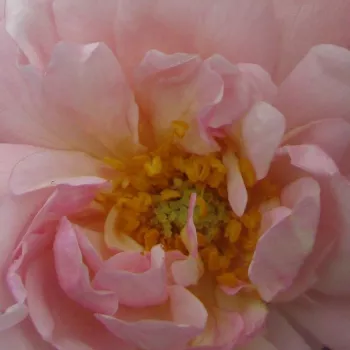
Warm peach‑pink flowers, RHS 36D outer and 38C inner, with cream tints and golden stamens; colour softens to silvery pink in summer, while cooler autumn weather deepens tones for a varied display. |
| Fragrance and aroma |
Strong, distinctive perfume combining sweet musk and gentle tea notes; scent carries well around seating areas, adding classic rose character that intensifies in the evening and in still, moist air. |
| Hip characteristics |
Rose hips rarely develop; when present they are small, spherical, 8–12 mm across, orange‑red, and usually scattered, so they do not significantly affect flowering display or maintenance needs. |
| Resistance and winter hardiness |
Hardy to around −26 to −23 °C, RHS H7, USDA zone 5b, with medium resistance to black spot, powdery mildew and rust; benefits from good air flow and sensible watering in damp Irish seasons. |
| Horticultural recommendations |
Best in well‑drained soil, including improved heavy clay, in sun or light shade; space 90–165 cm depending on use, water in dry spells, and prune moderately each year to renew flowering wood. |
CORNELIA – peach-pink park rose - Pemberton offers long-season clustered blooms, rich fragrance and durable own-root growth; a thoughtful choice if you seek easy romance and steady character for your garden.