CORALINE – apricot climbing rose – Eve
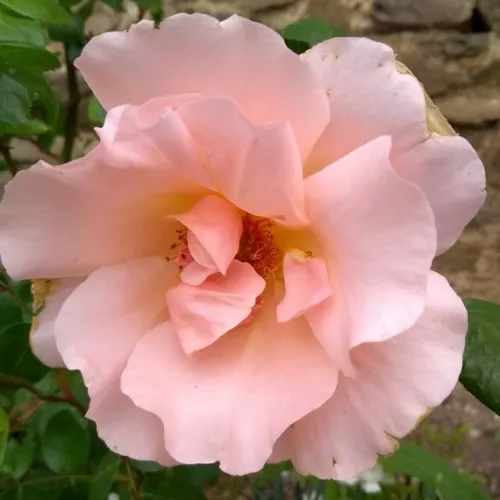
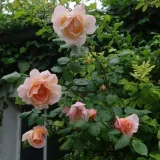
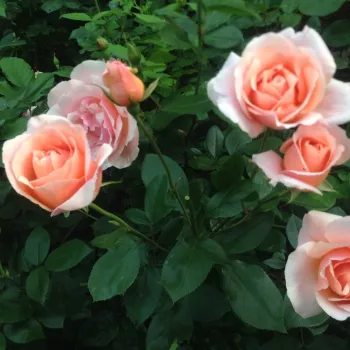
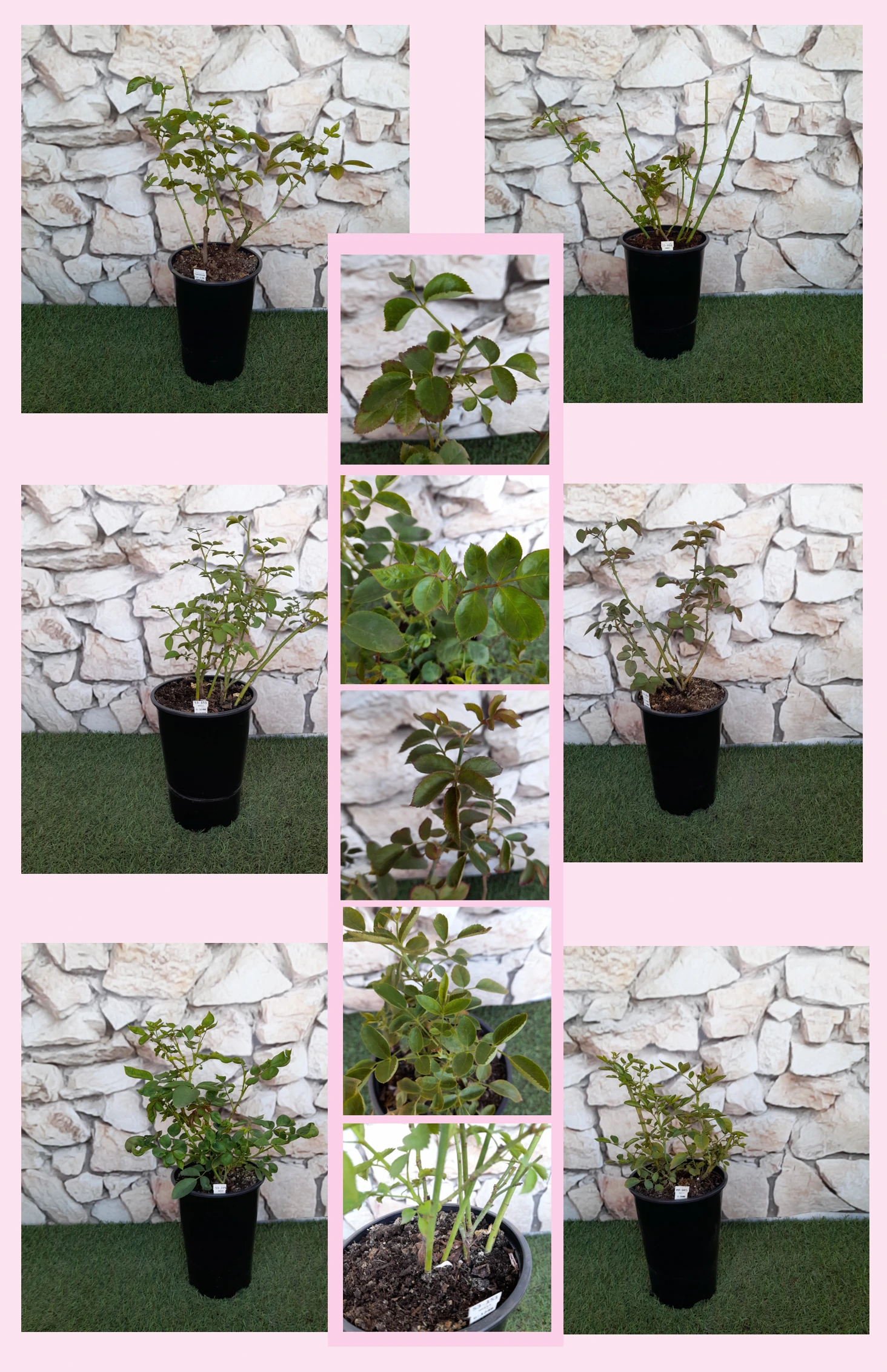
Imagine stepping outside for a gentle stroll as fine rain falls and soft green light catches the peach blooms of CORALINE, a graceful climbing rose that brings romance and easy charm to your Irish cottage or terraced front garden. Bred by André Eve, it offers relaxed elegance rather than fussy formality, clothing fences, pillars and house walls with semi-double flowers that open wide for visiting bees. In damp Irish summers, it remains reassuringly dependable, even where there is persistent humidity and a short growing season. Own-root plants establish steadily for a long, dependable lifespan, recovering well if pruned harder or nipped by weather, so you can simply enjoy its soft colour and cottage-garden charm as it settles in and gradually reaches its full potential over the first three years.
Usage options
| Target area |
Reasoning |
| Family pergola beside a seating area |
CORALINE’s tall climbing habit and semi-double, salmon-peach blooms are ideal for dressing a timber or metal pergola, creating a pretty overhead canopy without demanding expert pruning; an easy, soft-focus choice for the relaxed gardener beginner |
| Boundary fence in a small to medium back garden |
With 2,5–4 m height and moderate spread, this rose quickly clothes an ordinary fence, bringing colour and privacy while remaining manageable; repeat flowering means your boundary looks cheerful for much of the season, even for time-poor homeowners |
| Dublin terraced-house front wall or railing |
The warm peach-pink flowers and slightly glossy mid-green foliage give a gentle, “girly” cottage feel that softens brick and railings, turning even a narrow frontage into a welcoming façade for fragrance-loving urban gardeners |
| Pillar or obelisk focal point in lawn or border |
Trained up a pillar, CORALINE creates an elegant vertical accent that draws the eye without overwhelming a family lawn; its semi-double blooms and moderate hips add interest into autumn, suiting those who like structure with minimal upkeep |
| Mixed cottage border with pollinator interest |
Semi-double flowers with exposed stamens make this rose moderately attractive to bees, especially when interplanted with airy perennials such as Anemone and Gypsophila; perfect for nature-friendly, informal schemes favoured by eco-conscious buyers |
| Feature rose near patio doors or kitchen window |
The remontant habit and plentiful second flush keep soft peach colour in view for months, giving you something lovely to see whenever you glance outside, especially along walls that catch Irish light and showers valued by colour-loving families |
| Own-root long-term structure in a maturing garden |
As an own-root climber, CORALINE builds a durable framework of stems and can regenerate well from the base after hard pruning, offering stable ornamental value over many years as roots, then shoots, then full display develop for patient gardeners |
| Large container on terrace or balcony (minimum 40–50 L) |
In a generous container with good drainage, CORALINE can be trained on a trellis to bring vertical colour where soil is limited; watering and a yearly feed keep it performing reliably despite Atlantic winds and frequent rain for busy urban owners |
Styling ideas
- Cottage-Soft – Underplant CORALINE on a fence with Gypsophila repens and low catmint for a frothy, pastel edge – ideal for romantic, low-fuss front gardens.
- Peach-Glow – Train it over a simple arch and pair with cream foxgloves and soft grasses to catch evening light – perfect for families who relax outdoors after work.
- Terrace-Frame – In a 50 L pot with a trellis, mix trailing thyme and violas at the base – suited to compact city terraces needing vertical charm.
- Pollinator-Path – Let CORALINE climb along a path-side wall with Anemone ‘Fantasy Belle’ and Crocosmia ‘Lucifer’ – great for wildlife-minded cottage gardeners.
- Pillar-Poise – Spiral stems around a freestanding obelisk, edging with lavender for scent and structure – for those who like tidy shapes without complex pruning.
Technical cultivar profile
| Parameter |
Data |
| Name and registration |
Trade name CORALINE – apricot climbing rose – Eve; rambling rose collection; large-flowered climber type; American Rose Society exhibition name: Coraline; registered by Pépinières André Eve. |
| Origin and breeding |
Bred by André Eve in France, 1976, with unknown parentage; introduced and first distributed by Clause (France) the same year as a decorative climbing rose for garden use. |
| Growth and structural characteristics |
Climbing habit, typically 2,5–4 m high with 1,5–2,6 m spread; moderately dense, mid-green, slightly glossy foliage; moderately thorny stems, forming a flexible framework for training. |
| Flower morphology |
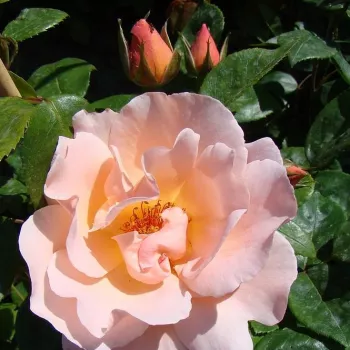
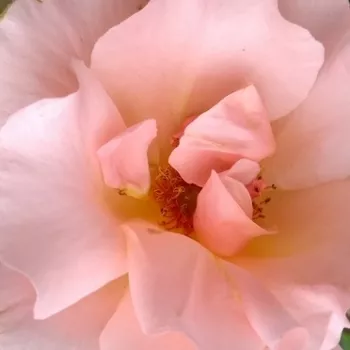
Semi-double, flat blooms, usually solitary, with 13–25 petals; large flower size around 7–10 cm; remontant with a plentiful second flush, and moderately self-cleaning with some hip formation. |
| Colour data and phenology |
Warm salmon-peach base with delicate pink tones; buds light peachy-pink; colour softens as flowers open and in strong sun; ARS code AB, RHS 30B outer and 28A inner petal colour references. |
| Fragrance and aroma |
Very light fragrance with a classical rosy character; scent noticeable only at close quarters, so best enjoyed near paths, doors or seating where you can pause beside the flowers. |
| Hip characteristics |
Moderate crop of ovoid, orange-red hips, typically 12–18 mm in diameter; decorative in autumn and winter, adding seasonal interest where spent flowers are not fully deadheaded. |
| Resistance and winter hardiness |
Hardy to about −21 to −18 °C (USDA 6b, RHS H7, Swedish zone 3); moderate resistance to black spot, mildew and rust; needs watering in prolonged drought despite generally robust performance. |
| Horticultural recommendations |
Best on well-drained soil with organic mulch; spacing about 140 cm for fences or 220 cm as a solitary feature; suitable for partial shade; train on pergolas, walls, pillars or fences, also useful for cutting. |
CORALINE offers soft peach colour, repeat flowering and flexible climbing growth on a durable own-root framework, an appealing option if you want lasting romance with manageable care in your garden.