CHRISTINE HÉLÈNE – yellow rambler climbing rose - Meile
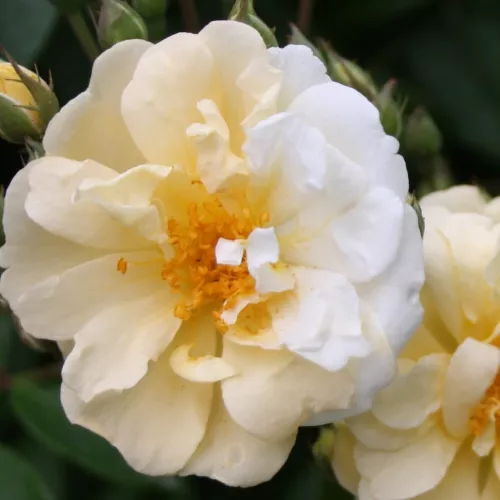
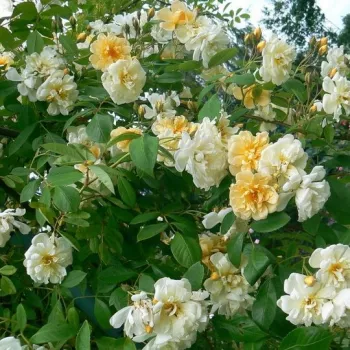
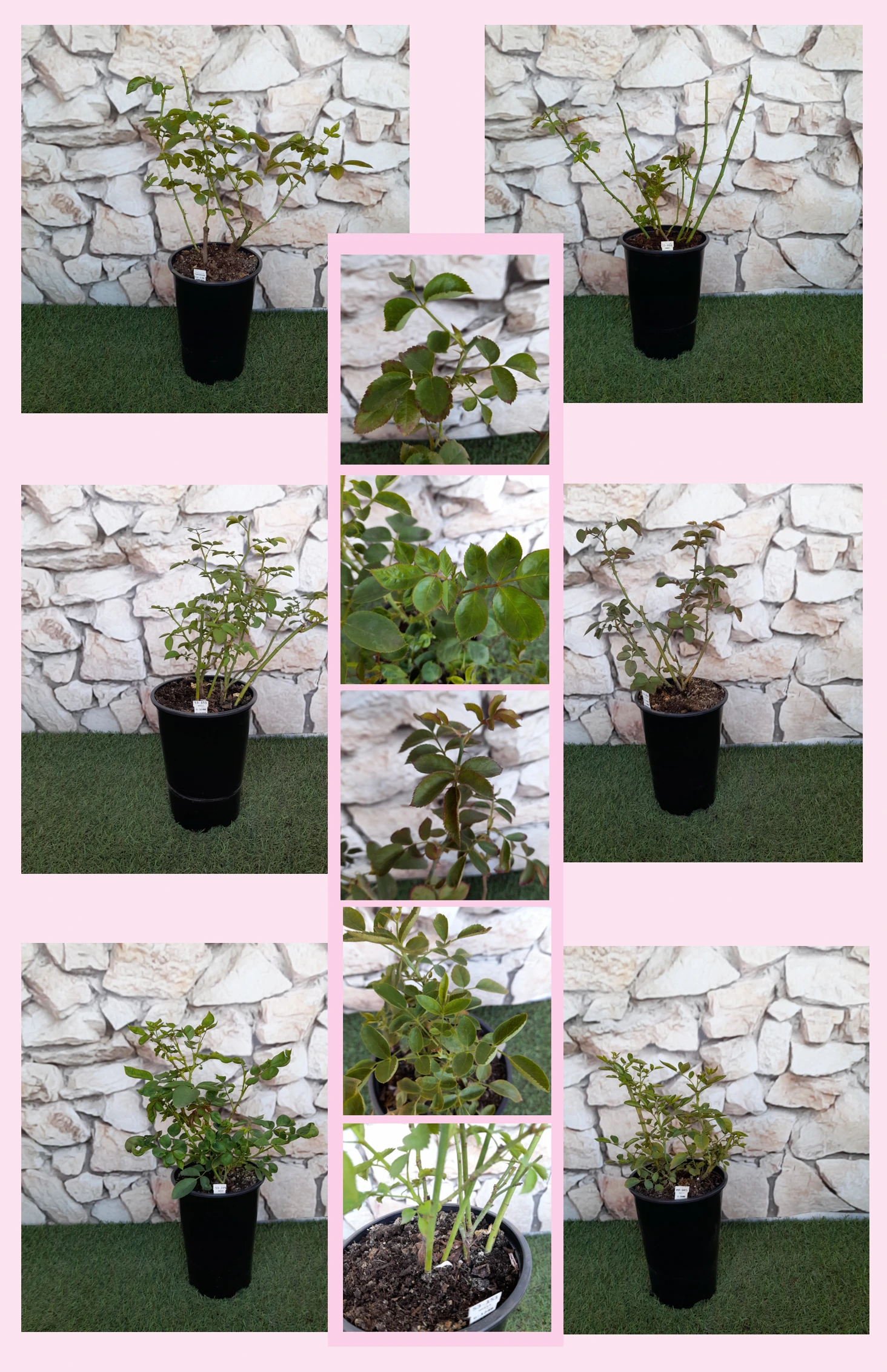
If you dream of a soft, romantic rose cloaking an arch or terrace without demanding constant work, Christine Hélène is made for you. This rambling rose clothes itself in clouds of pastel, lemon‑cream blooms, turning even a small Irish cottage or terraced‑house front garden into a gentle, storybook haven. Bred for reliability, it shrugs off wet summers and cool winds, coping gracefully with Ireland’s frequent rain and short, mild summers while keeping its foliage clean and healthy. Once planted in good soil with decent drainage, its own‑root habit means long‑term stability, quiet regrowth after any winter setbacks, and a reassuringly low need for pruning or spraying. Over time, it builds into a tall, elegant screen with surprisingly sparse thorns, so it is easier to manage around family paths. You simply guide its flexible shoots over an arch, pergola, fence or small tree, then enjoy its repeat flush of flowers and gentle, sweet fragrance. Think of it as a living curtain of light, cream‑yellow blossoms that becomes more impressive each year as roots establish, shoots lengthen, and by the third summer it shows its full, romantic character.
Usage options
| Target area |
Reasoning |
| Rose arch at a cottage-style front gate |
Christine Hélène’s long, flexible rambling canes and semi-double, creamy yellow flowers are ideal for clothing an arch where space is limited but height is welcome. Once tied in during the first couple of years, growth becomes self-supporting and low‑maintenance, with few thorns to catch clothes or hands, giving a welcoming soft focus to your entrance for beginners. |
| Pergola beside a family patio |
The variety’s generous height and 200–350 cm spread create a romantic overhead canopy, yet its maintenance requirements remain low, suiting busy families. Its mild, sweet scent and repeat flowering add seasonal charm to outdoor dining areas, and own‑root plants age gracefully, providing long-lived cover without complex pruning, ideal for homeowners. |
| Trained into a small garden tree |
Light, flexible shoots and sparse thorns make it easy to weave through the branches of a sturdy small tree, creating a cascading effect of cream-yellow clusters over existing structure. The semi-double flowers allow limited hip formation without weighing branches down, while the own‑root resilience supports steady regrowth year after year for hobby-gardeners. |
| Solitary specimen for Dublin terraced front gardens |
Planted as a single feature near the boundary, it offers strong vertical impact with modest ground footprint, ideal where space is tight. Its tolerance of partial shade and cool, damp weather means reliable performance in urban streetscapes, and the foliage remains dense and dark green, giving structure even between bloom flushes to please urban-owners. |
| Romantic cottage-garden backdrop or boundary screen |
With a potential height up to 5 m and good spread, this rambler forms a soft, flowering screen at the back of borders or along fences. It copes well with frequent rain and cool winds typical of Irish gardens, reducing worries about leaf disease, while pastel tones blend easily with perennials and informal plantings for cottage-lovers. |
| Low-effort family garden rose for busy schedules |
Maintenance needs are modest: an annual tidy, tying new shoots, and basic feeding. Own‑root plants recover well from accidental damage, remaining stable and attractive without specialist pruning. In the first year it focuses on roots, the second on framework, and by the third brings full ornamental value, rewarding patient but time-poor gardeners. |
| Cool, exposed or wind-prone sites |
Exceptional winter hardiness down to approximately –34 °C and strong resistance to common fungal diseases make this rose reliable where conditions are harsh. Its robust constitution and dense foliage stand up well to Atlantic breezes and persistent rainfall, keeping the plant presentable with minimal chemical input for environmentally minded families. |
| Large container on a balcony or paved courtyard |
Where soil is poor or heavy clay, a 40–50 litre container with good drainage allows Christine Hélène to thrive while you train it onto a trellis or small arch. The restrained fragrance and pale colouring suit close-up viewing, and own‑root vigour maintains long-term performance in pots, appealing to compact-space city-dwellers. |
Styling ideas
- Cottage-Arch – Let Christine Hélène drape over a simple wooden arch, underplant with creeping baby’s-breath and thyme for a frothy, pastel entrance – perfect for cottage-garden romantics.
- Soft-Screen – Train it along light wires on a front boundary, pairing with airy lobelia at the base for a semi-transparent floral screen – ideal for privacy-seeking homeowners.
- Tree-Veil – Thread its canes through a small ornamental tree, creating a veil of lemon-cream blooms hovering above the lawn – suited to creative hobby gardeners.
- Patio-Pergola – Cover a compact pergola beside the terrace, combining with pots of lavender and thyme for scent and texture – great for relaxed family entertaining.
- Balcony-Frame – Grow it in a 50 litre container and fan-train onto a trellis, softening walls while leaving floor space free – ideal for style-conscious city dwellers.
Technical cultivar profile
| Parameter |
Data |
| Name and registration |
CHRISTINE HÉLÈNE – yellow rambler climbing rose, trade name by Meile, rambler group, climbing rose type; American Rose Society exhibition name Christine Hélène; commercial group Rós dreapadó. |
| Origin and breeding |
Rosa helenae seedling × ‘Ghislaine de Féligonde’, bred by Christine Meile in Germany, 2005; introduced by Rosenhof Schultheis; registered cultivar name not recorded, feminine forename used as trade name. |
| Growth and structural characteristics |
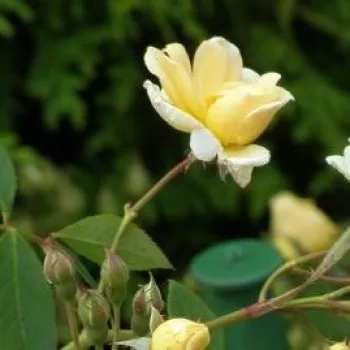
Strong rambler with climbing habit, reaching about 300–500 cm in height and 200–350 cm spread; dense, dark green matte foliage; sparsely thorned canes; suitable for training over supports and into small trees. |
| Flower morphology |
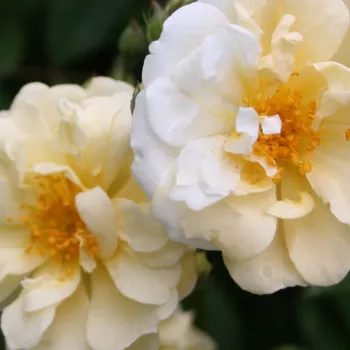
Semi-double, flat flowers in small clusters, petal count approximately 13–25; small 1–4 cm blooms borne repeatedly with a generous second flush; cluster-flowered inflorescences giving a soft, billowing effect on trained frameworks. |
| Colour data and phenology |
Pale lemon-yellow opening, RHS 11C outer, 8D inner, fading to creamy yellow then near white with buttery centre; colour retention excellent; overall effect pastel yellow with cream-white tint, luminous in soft light and cool, overcast conditions. |
| Fragrance and aroma |
Fragrance character softly sweet with a gentle, restrained scent; not overpowering near seating or entrances; ideal where subtle perfume is preferred; aroma best appreciated at close range during warm, still periods of the day. |
| Hip characteristics |
Limited hip formation due to semi-double flowers; occasional small spherical orange hips 6–10 mm in diameter may develop; hips add discreet seasonal interest but are not a dominant ornamental feature of this cultivar. |
| Resistance and winter hardiness |
Very winter-hardy rambler, tolerating approximately –34 to –32 °C (USDA 4a, RHS H7, Swedish zone 5); good resistance to powdery mildew, black spot and rust; suitable for cool, wet climates with high fungal pressure. |
| Horticultural recommendations |
Ideal for arches, pergolas, training into trees or as solitary specimen; spacing 225–380 cm depending on use; prefers well-drained soil, including improved heavy clay; tolerates partial shade; maintenance low with basic tying and annual pruning. |
CHRISTINE HÉLÈNE combines low-maintenance vigour, romantic repeat flowering and exceptional hardiness in an own-root form that promises long, reliable growth; an excellent choice if you would like a graceful, enduring climber.