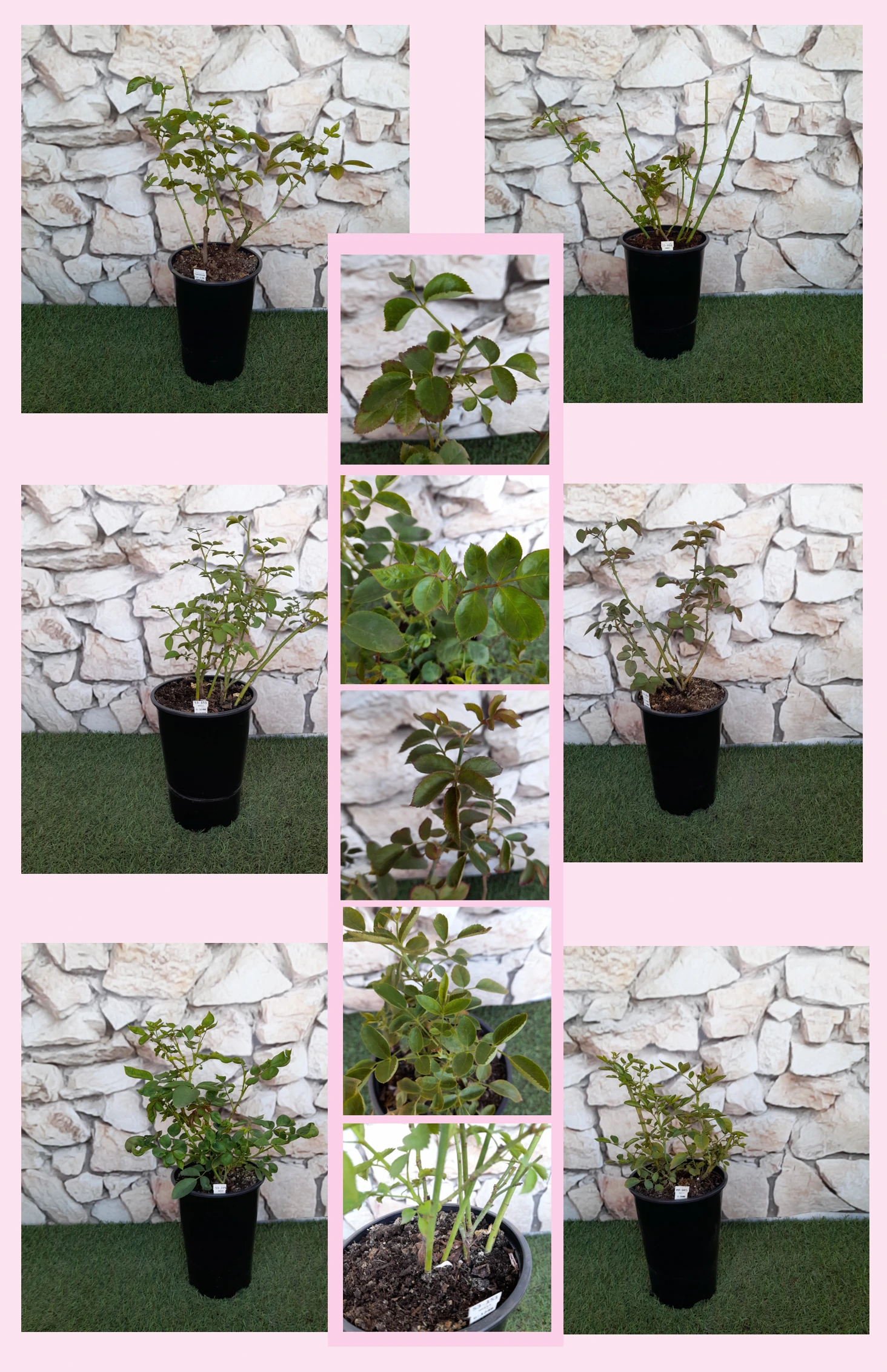
CHARLOTTE – yellow English rose – Austin
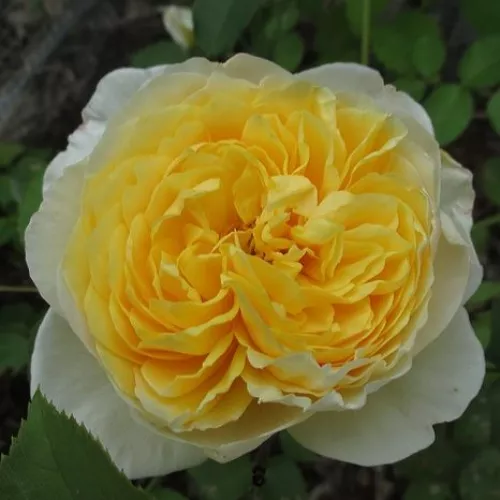
Soft lemon rosettes, a gentle tea fragrance and the reassuring charm of a classic English shrub make ‘Charlotte’ a welcoming presence in Irish cottage borders and neat Dublin front gardens, even where rainfall is frequent and light levels are low. This bushy, upright rose fills a modest space with colour, flowering in generous flushes from early summer well into autumn, bringing an air of relaxed romance to paths, picket fences and bay windows. Planted in a free-draining spot and mulched to steady soil moisture, it settles in reliably as an own-root rose, building a deeper rootstock in its first year, stronger top growth in its second, and then reaching its full ornamental effect by the third, for quietly enduring garden pleasure.
Usage options
| Target area |
Reasoning |
| Cottage-style mixed border in a family garden |
The bushy, upright habit and dense foliage make ‘Charlotte’ a natural fit among herbaceous perennials, where its repeated lemon-yellow rosettes add romantic structure without dominating the space; ideal for informal mixed borders enjoyed by the whole household. |
| Dublin terraced-house front garden |
Its compact height and 80–120 cm spread suit narrower beds and railings, while the refined, richly petalled blooms and medium-strength tea scent give daily pleasure on the walk to your front door, creating a charming welcome for every visiting guest. |
| Own-root feature rose near a seating area |
As an own-root shrub it matures into a stable, long-lived plant that can regenerate from its base, holding its shape attractively beside a bench or patio and offering dependable flowers year after year for the relaxed garden-centred homeowner. |
| Season-long colour anchor in a flower bed |
The remontant flowering pattern with an abundant second flush keeps soft yellow blooms appearing from early summer to autumn, bridging gaps between perennials and bulbs so the bed never feels bare, particularly appreciated by time-pressed gardeners. |
| Cut-flower corner for indoor arrangements |
Large, very full rosettes with 40+ petals make elegant cut flowers; a few stems in a jug bring that creamy, sunlit yellow indoors, while the medium tea fragrance gently perfumes a room, suiting creative, flower-loving arrangers. |
| Part-shaded side path or north-east aspect |
Tolerance of partial shade allows planting where morning or dappled light prevails; here, petals hold their colour beautifully and the plant still flowers well, a reassuring choice for tricky aspects often faced by urban and suburban residents. |
| Prestige bed or park-style planting |
Recognised with the RHS Award of Garden Merit, this cultivar offers proven ornamental value with reliably attractive blooms and foliage, lending a touch of classic English rose quality to more formal beds curated by discerning rose enthusiasts. |
| Well-drained, mulched bed in wetter, windy spots |
In beds improved for drainage and protected with organic mulch, ‘Charlotte’ copes steadily even where soft Atlantic weather brings frequent showers and cool breezes, rewarding simple care with healthy growth appreciated by coastal and western-region owners. |
Styling ideas
- Cottage-Romantic – weave ‘Charlotte’ through pink cranesbill geraniums and soft grasses for a loose, old-fashioned border – ideal for lovers of storybook cottage gardens.
- Front-Door Welcome – plant one on each side of a path with low lavender edging to frame the lemon-yellow blooms – perfect for urban homeowners seeking a gentle, scented entrance.
- Tea-and-View – place ‘Charlotte’ near a favourite chair with space for air circulation so you can enjoy repeated flushes and fragrance – suited to those who relax outdoors after work.
- Yellow-Focus – combine with white foxgloves and pale blue campanulas so its warm buttery-yellow flowers stand out as the main colour anchor – for gardeners who like calm, coordinated schemes.
- Parkland-Elegant – group three shrubs with clipped evergreen shapes to echo its award-winning form and flowering, creating a refined park-style corner – appealing to design-conscious garden planners.
Technical cultivar profile
| Parameter |
Data |
| Name and registration |
Charlotte – English shrub rose from the English Rose Collection, registered as AUSpoly; romantic yellow garden variety for beds, borders and specimen planting, approved exhibition name ‘Charlotte’. |
| Origin and breeding |
Bred by David C. H. Austin in the United Kingdom from an unknown seedling crossed with ‘Graham Thomas’; introduced and registered in 1994 as part of his celebrated English rose breeding work. |
| Awards and recognition |
Holds the Royal Horticultural Society Award of Garden Merit (2002), confirming reliable garden performance, decorative value and stable characteristics under typical British and Irish growing conditions. |
| Growth and structural characteristics |
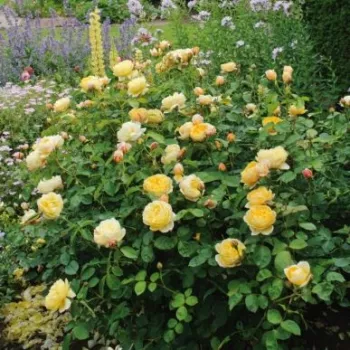
Bushy, upright shrub typically 90–130 cm high and 80–120 cm wide, with dense, slightly glossy medium-green foliage and moderate prickliness; overall effect is rounded, full and well-branched. |
| Flower morphology |
Large, very full rosette blooms, 7–10 cm across, with more than 40 petals; flowers borne in clusters, opening repeatedly through the season with a notable second flush after the first main flowering. |
| Colour data and phenology |
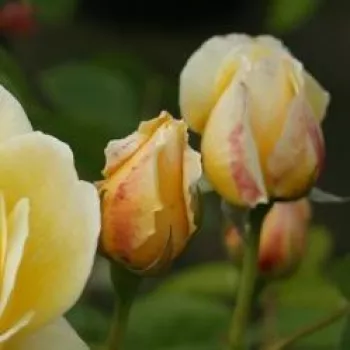
Creamy, soft sunlit yellow with deeper golden centre; buds bright yellow with green-tinged edges, ageing to pale cream-yellow; colour lightens in strong sun and intensifies in cooler conditions. |
| Fragrance and aroma |
Medium-strength, clearly noticeable fragrance of classic tea-rose character; scent is refined rather than overpowering, contributing to its suitability near paths, seating areas and house entrances. |
| Hip characteristics |
Rose hip set is generally sparse due to very double flowers; when present, hips are small ellipsoidal structures 7–12 mm in diameter, coloured orange-red and of mainly ornamental interest. |
| Resistance and winter hardiness |
Hardy to around −32 to −29 °C (USDA 4b, RHS H7); disease resistance moderate overall but very susceptible to powdery mildew, with medium sensitivity to black spot and rust, so monitoring is needed. |
| Horticultural recommendations |
Best in fertile, well-drained soil with regular feeding and irrigation during dry spells; allow 55–100 cm spacing; prune for air circulation and apply preventive protection where mildew pressure is high. |
Charlotte English Rose AUSpoly offers repeated lemon-yellow blooms, elegant fragrance and a stable own-root shrub for long-lived structure; consider it if you would like a quietly romantic, enduring garden feature.