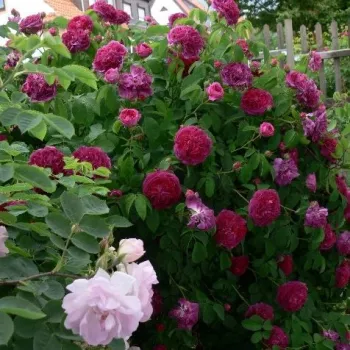
CHARLES DE MILLS – purple-lilac historic Gallica rose
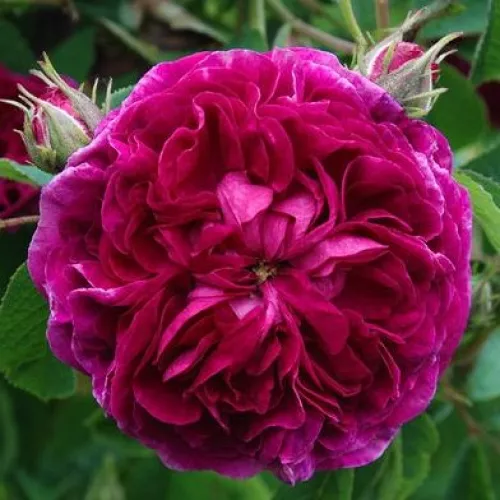
Step out to meet heritage charm with CHARLES DE MILLS, a historic Gallica rose that turns the brief Irish summer into a moment of intense, once-a-year drama. Its extra-large, fully rosetted blooms open in rich, velvety crimson-purple with lilac undertones, creating a centrepiece worthy of an old Dublin terrace or a romantic cottage border. The strong, classic gallica fragrance carries on damp evenings, even when soft Atlantic showers and salt-tinged breezes roll across your garden. Upright, bushy growth and dense foliage make it ideal for seasonal hedging or a single statement plant, while its own-root form promises longevity and reliable regrowth after hard pruning or winter setbacks. In heavy clay, simple drainage and a good mulch let it settle, with roots establishing in year one, stronger shoots in year two, and full ornamental value from year three for enduring pleasure.
Usage options
| Target area | Reasoning |
|---|
| Cottage-style mixed flower bed |
The upright, bushy habit and XL, velvety purple blooms give an instant old-world focal point in a mixed border, pairing beautifully with soft perennials and grasses in an Irish cottage garden, ideal for the nostalgic romantic gardener |
| Seasonal flowering hedge |
Dense foliage and a naturally upright structure allow CHARLES DE MILLS to form a classic low hedge with recommended 90 cm spacing, offering a dramatic, once-a-season wall of colour for those who enjoy a defined yet informal boundary homeowner |
| Specimen shrub near seating |
The strong, far-scented gallica perfume is best appreciated up close, so planting as a single specimen by a bench or terrace door lets the fragrance and intricate rosette flowers be enjoyed during everyday routines by fragrance-seeking visitors |
| Heritage focal point in city front garden |
This historic cultivar, introduced in 18th-century Netherlands, lends a cultivated, time-honoured feel to small Dublin front gardens, suiting terraced houses where a single, characterful shrub speaks volumes to heritage-loving collectors |
| Part-shade side border |
Shade tolerance means it copes well where sunlight is filtered by walls or neighbouring houses, maintaining flower quality even without full-day sun, appealing to urban plots with limited direct light and pragmatic owners |
| Cut flowers for home arrangements |
The very double, rosette blooms on cluster stems make luxurious, richly coloured cuts for vases, offering a short but unforgettable cutting season to those who enjoy arranging home-grown flowers and creative hosts |
| Low-maintenance long-term shrub |
Own-root growth and robust hardiness to typical Irish winters support a long-lived shrub that can recover from hard pruning and weather stress, suiting busy households who want lasting structure with occasional attention from time-poor beginners |
| Autumn interest in naturalistic planting |
If spent blooms are left, orange-red spherical hips develop, adding subtle seasonal colour after flowering has finished and providing textural contrast with perennials, attractive to those who value extended seasonal detail and thoughtful gardeners |
Styling ideas
- Cottage-hedge – Line a front path at 90 cm spacing and underplant with low catmint for a billowing, scented seasonal hedge – ideal for cottage-style front-garden owners
- Evening-bench – Place a single shrub beside a small seating area, framed with soft ferns, to savour the gallica perfume on damp evenings – perfect for fragrance-focused homeowners
- Heritage-trio – Group three plants in a triangle as a lawn island, edged with Stachys byzantina, for a historic focal point – suited to lovers of traditional planting
- Patio-centrepiece – Grow one plant in a 40–50 litre container and combine with trailing thyme for colour and scent near the door – practical for busy urban gardeners
- Autumn-weave – Mix into a naturalistic border with late grasses so hips glow among seedheads after flowering – appealing to season-conscious garden stylists
Technical cultivar profile
| Parameter | Data |
|---|
| Name and registration |
CHARLES DE MILLS, historic Gallica rose from the Heritage rose collection; commercial type Rós stairiúil; exhibition category old garden gallica and cut flower; ARS exhibition name CHARLES DE MILLS. |
| Origin and breeding |
Originating in the Netherlands, bred around 1786 with introduction circa 1790; parentage and breeder unknown, typical of classic gallica heritage roses distributed before modern registration systems. |
| Awards and recognition |
Holds the RHS Award of Garden Merit (1993), confirming reliable garden performance, ornamental value and stable characteristics under typical conditions, with particular merit in well-managed heritage-style plantings. |
| Growth and structural characteristics |
Upright shrub with dense, matt mid-green foliage; slightly thorny stems; typical height and spread 120–180 cm; forms a bushy, structural presence suitable for hedging, beds, or standalone specimens. |
| Flower morphology |
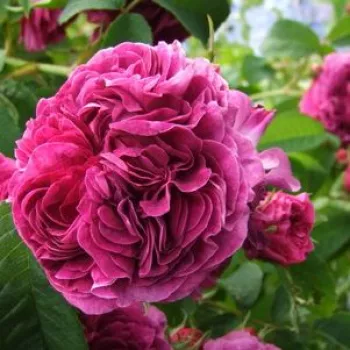
Very double, rosette-form, XL blooms over 10 cm across, borne in clusters; non-remontant, providing a single, concentrated flowering season; weak self-cleaning, with spent blooms forming ornamental rose hips. |
| Colour data and phenology |
Deep, velvety crimson-purple with lilac undertones; RHS 60A outer, 60C inner; petals gain mauve-silver edging as they mature and may lighten slightly in strong sun while retaining an overall rich purple-violet effect. |
| Fragrance and aroma |
Strong, far-reaching classic gallica scent, especially noticeable in still, humid air; primarily an ornamental variety, with very double blooms that hide stamens and offer limited access for bees and other pollinators. |
| Hip characteristics |
Moderately abundant, spherical orange-red hips 9–15 mm in diameter develop if flowers are not deadheaded, extending ornamental interest into autumn and supporting a subtly textured seasonal transition. |
| Resistance and winter hardiness |
Hardy to approximately -32 to -29 °C (USDA 4b, RHS H7); medium resistance to black spot, powdery mildew and rust; performs best with regular watering in dry spells and basic preventative care in damp seasons. |
| Horticultural recommendations |
Suited to beds, hedges, specimen planting, parks and cutting gardens; tolerates partial shade; use spacing from 90 to 165 cm; prefers well-drained soil with mulch on heavy clay to protect roots and structure. |
CHARLES DE MILLS offers richly scented heritage flowers, a dramatic seasonal hedge or specimen effect, and resilient own-root longevity; an excellent choice if you value historic character with dependable garden presence.