CHANDON ROSIER – red hybrid tea rose – Delbard
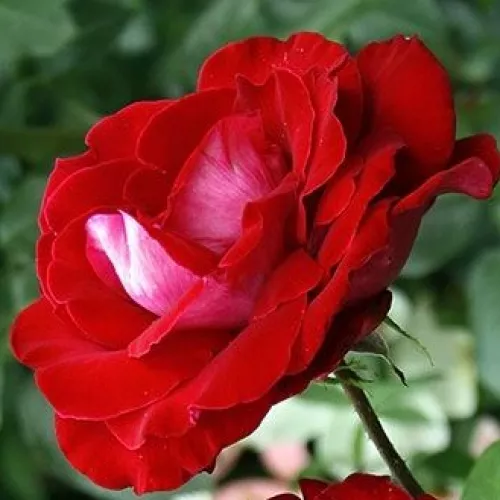
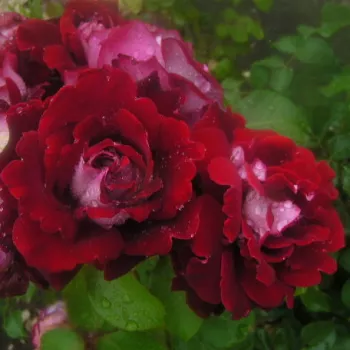
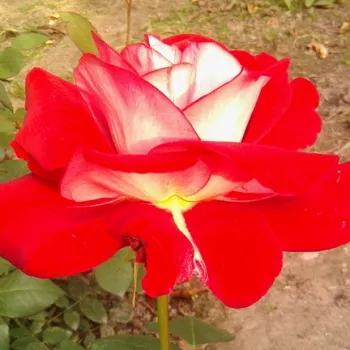
Bring a touch of romantic charm to your garden with CHANDON ROSIER, a classic hybrid tea that thrives in Irish gardens and shrugs off rainfall with ease. Large, velvety, ruby-red blooms with a silvery reverse add drama to small front gardens and cottage-style borders, while the medium, spicy-fruity fragrance lends a cheerful, uplifting note on damp mornings. Upright, well-foliaged growth keeps the plant neat and elegant, ideal where you want reliable structure with minimal fuss. As an own-root rose it builds longevity and recovers well after harsh pruning, giving steadily stronger performance from roots in year one, to fuller shoots in year two, to complete ornamental presence in year three. With moderate care needs and repeat flowering through the season, it suits busy gardeners who still value cut stems for the vase and that soft, glowing light outside the front door.
Usage options
| Target area |
Reasoning |
| Feature rose by the front door |
The upright, 100–140 cm habit and dense, glossy foliage give strong vertical structure without overpowering a small space, while the velvety red blooms create a welcoming, traditional feel in Dublin terrace fronts, ideal for homeowners |
| Classic hybrid tea bed |
Large, high-centred exhibition blooms on long stems make a smart, orderly bed when planted at 50 cm spacing, perfect for gardeners who like a formal layout but prefer not to fuss over complex pruning, suitable for beginners |
| Cutting patch in a family garden |
Solitary, long-stemmed flowers with a spicy, fruity scent are ideal for cutting; remontant flowering provides a second flush so you can take stems for the house without stripping the garden, appreciated by flower-lovers |
| Own-root long-term specimen |
Grown on its own roots, the plant re-shoots reliably after hard pruning or winter damage and keeps a stable shape over many years, giving dependable colour in the same spot with modest upkeep, reassuring for planners |
| Container on patio or balcony |
In a 40–50 litre pot with good drainage, its moderate width and upright habit work well for confined spaces, and regular deadheading keeps flowers coming over summer despite our changeable weather, convenient for urbanites |
| Irish cottage garden border |
The rich, glowing red and silver-toned petal backs mix beautifully with loose grasses and perennials, creating a soft, old-fashioned look that still feels refined, attractive to romantics |
| Show and exhibition enthusiasts |
Bred as a hybrid tea with a strong show background and prize-winning record, it offers the form and stem length needed for local shows while remaining manageable in an ordinary family plot, appealing to collectors |
| Wind-exposed suburban gardens |
A sturdy, upright framework and moderate disease tolerance cope well in breezy, damp sites where good air flow and regular deadheading help the blooms look fresh despite frequent soft rain, helpful for coastal-gardeners |
Styling ideas
- Cottage-velvet – Underplant with Blue Zinger sedge and white campanulas for a soft, drifting skirt of foliage and bells – ideal for cottage-style gardeners
- Front-door-focus – Flank a path with two specimens and low lavender edging to frame the entrance with scent and colour – perfect for terrace and townhouse owners
- Ruby-border – Mix with Monarda ‘Jacob Cline’ and dusky cranesbills for layered reds and burgundies that glow in evening light – suited to colour-conscious design lovers
- Patio-centrepiece – Plant a single rose in a 50 litre terracotta pot with trailing thyme spilling over the rim for easy summer care – practical for balcony and patio users
- Show-bench – Grow a neat, single-variety row with discreet supports to produce straight, exhibition-quality stems – rewarding for competitive rose exhibitors
Technical cultivar profile
| Parameter |
Data |
| Name and registration |
Hybrid tea rose, registered as DELatur; trade names CHANDON ROSIER and Alleluia®. Part of the Grands Coloris collection, classified as exhibition hybrid tea for garden and cutting use. |
| Origin and breeding |
Bred by Georges Delbard in France from complex hybrid tea parentage including Impeccable, Papa Meilland, Gloire de Rome and Corrida; breeding and registration around 1980, introduced 1982. |
| Awards and recognition |
Recognised with Certificat de Mérite at Bagatelle, Paris in 1980 and later high show honours, including King of Show at Kansas City and awards from the Golden Triangle Rose Society. |
| Growth and structural characteristics |
Upright bush reaching 100–140 cm high, 50–70 cm wide, with dense, dark green, glossy foliage and moderate prickles; weak self-cleaning so benefits from regular deadheading for best display. |
| Flower morphology |
Large, 7–10 cm, double blooms with 26–39 petals; classic high-centred, pointed-bud hybrid tea form borne mainly singly on stems, with remontant flowering and an abundant second flush. |
| Colour data and phenology |
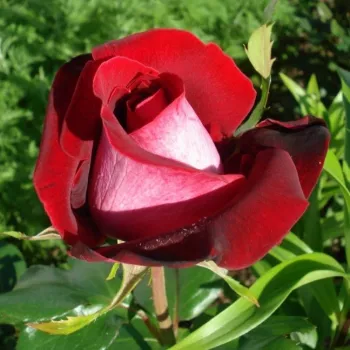
Deep velvety red petals with silvery-pink reverses; colour softens slightly to warm burgundy, with the backs lightening in strong sun; ARS code RB, RHS 53A outer and 155C inner surfaces. |
| Fragrance and aroma |
Moderate but distinct perfume combining spicy and fruity notes; noticeable at arm’s length in still air and strong enough for cutting, yet not overpowering near doors, paths or seating areas. |
| Hip characteristics |
Poor hip set due to double blooms, yet when formed produces small, spherical hips about 10–14 mm, coloured orange-red, offering a light ornamental effect late in the season. |
| Resistance and winter hardiness |
Rated hardy to about –15 to –12 °C (RHS H6, Swedish zone 2, USDA 7b) with moderate resistance to black spot, mildew and rust; responds well to basic, preventative care in damp climates. |
| Horticultural recommendations |
Prefers full sun and fertile, well-drained soil; space 40–80 cm depending on use, with 4–4.6 plants per m² in beds; water during dry spells and deadhead to maintain repeat flowering and form. |
CHANDON ROSIER offers velvety red, fragrant blooms, strong upright growth and resilient own-root longevity, making it a thoughtful choice for those planning a reliable, long-lived garden feature.