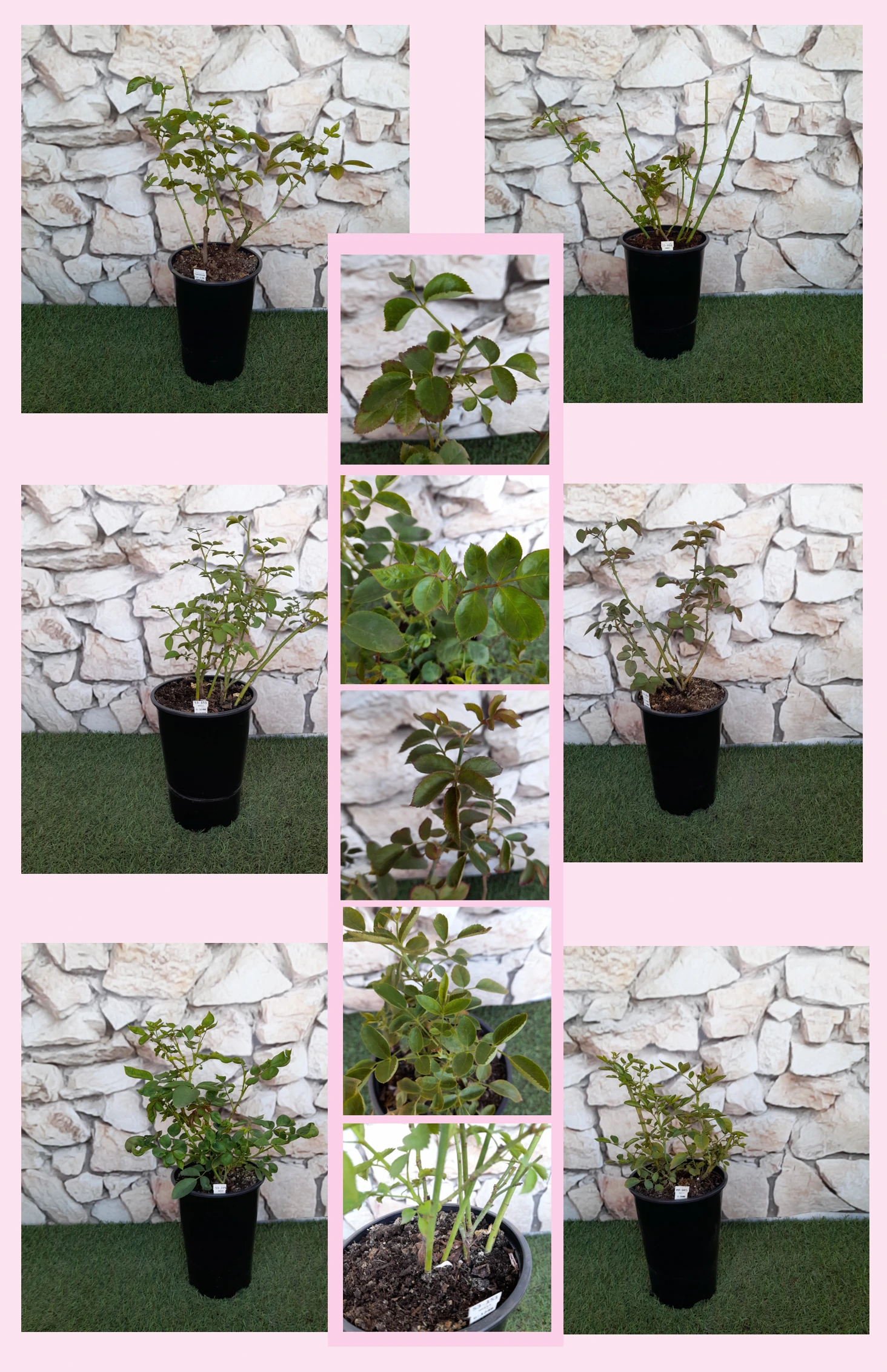
TRIVIANI – purple-white tea-hybrid rose – pharmaROSA®
In a small Irish front garden or cottage border, TRIVIANI offers an easy way to bring a soft, romantic glow of colour and gentle structure to your everyday view, even when the sky is grey and the breeze carries a hint of Atlantic salt. Large, cup-shaped blooms open again and again through the season, their striped petals creating a striking yet harmonious focus that suits both relaxed and more formal spaces. As an own-root rose, it settles in steadily, building a durable framework that promises years of reliable flowering with only modest care. Give it a well-drained spot, a little mulch and room to grow, and you can look forward to a natural progression from establishing roots to strengthening shoots and finally a full, graceful presence that feels like it has always belonged in your garden.
Usage options
| Target area |
Reasoning |
| Cottage-style mixed border in a family garden |
TRIVIANI’s upright habit and dark, glossy foliage give dependable structure in cottage-style planting, while its large, striped blooms add a “girly” note without looking fussy; suited to relaxed, nature-leaning beginners. |
| Small Dublin terraced-house front garden |
The compact, upright plant fits neatly into narrow beds by paths or railings, giving a clear focal point from the pavement with minimal fuss, ideal for time-poor homeowners. |
| Feature rose in a lawn island bed |
Planted as a specimen at its wider spacing, the steady repeat flowering and bold petal striping draw the eye even across a small lawn, rewarding modest care from casual gardeners. |
| Low flowering hedge along a drive or boundary |
Planted at hedge spacing, TRIVIANI forms a dense, glossy line that looks tidy year-round and lights up with recurring colour, suiting practical, appearance-focused families. |
| Medium to large container near the front door |
In a 40–50 litre pot with good drainage, this rose offers long-season blooms right where you pass daily, needing only regular watering and feeding, perfect for busy urban residents. |
| Roses for wetter, wind-touched Irish plots |
Moderate disease resistance and solid hardiness help it cope in humid, breezy gardens where showers roll in from the coast, making it a sound choice for weather-aware buyers. |
| Long-term planting with low replacement needs |
As an own-root shrub, TRIVIANI builds strength over successive years, regenerating from its own base if cut back hard, suiting those who prefer durable, low-turnover plantings. |
| Colour accent with airy, romantic companions |
The bold striping pairs beautifully with soft grasses and light, cloud-like perennials, turning a simple bed into a gentle, rain-kissed scene that appeals to atmosphere-loving collectors. |
Styling ideas
- Cottage-Stripe Charm – Combine TRIVIANI with Gypsophila 'Festival Pink Lady' and soft pink perennials for a frothy, romantic striping contrast – ideal for front gardens of period terraces.
- Front-Door Welcome – Grow one plant in a 40–50 litre container flanking your entrance, underplanted with trailing thyme to soften the pot edge – ideal for busy city-dwelling homeowners.
- Soft-Edge Hedge – Plant a low row along a path and weave in lavender or catmint to blur the line between path and border – ideal for family gardens that favour gentle structure.
- Prairie Glow – Set TRIVIANI among Panicum virgatum 'Sangria' and other airy grasses so the blooms float in a haze of movement – ideal for design-aware hobby gardeners.
- Ceanothus Contrast – Back TRIVIANI with Ceanothus thyrsiflorus so its crimson-striped flowers pop against a deep blue-green backdrop – ideal for colour-loving cottage-garden fans.
Technical cultivar profile
| Parameter |
Data |
| Name and registration |
TRIVIANI is a hybrid tea rose marketed as TRIVIANI – purple-white tea-hybrid rose – pharmaROSA®, belonging to the Rós taehibride commercial group; formal registration data are currently not available. |
| Origin and breeding |
Hybrid tea rose discovered in Hungary by pharmaROSA®, with a recorded breeding year of 2020; detailed parentage, breeding company records and registration dates are not yet documented. |
| Growth and structural characteristics |
Vigorous, upright shrub reaching about 95–125 cm high and 75–105 cm wide, with dense, dark green, glossy foliage and moderate prickliness, forming a solid structural presence in mixed plantings. |
| Flower morphology |
Very full, solitary, cup-shaped blooms with over 40 petals, typically 7–10 cm across; flowers are borne mainly singly on stems, and the variety is remontant with a notably abundant second flush. |
| Colour data and phenology |
Blooms open vivid red to raspberry-pink with irregular white streaks, then mellow towards brownish chestnut with creamy-yellowish striping; colour retention is good, with contrast softening as flowers age. |
| Fragrance and aroma |
No reliable description of fragrance character or intensity is currently available; gardeners should treat the cultivar primarily as a visual feature rather than a strongly scented rose. |
| Hip characteristics |
Rose hips are expected only occasionally, as the very double blooms and routine deadheading limit set; any hips present are incidental and not a primary ornamental feature of this cultivar. |
| Resistance and winter hardiness |
Rated to approximately –21 to –18 °C (USDA 6b, RHS H7, Swedish zone 3); disease resistance to powdery mildew, black spot and rust is medium, needing occasional preventive care in humid seasons. |
| Horticultural recommendations |
Space plants at 65 cm for mass plantings, 55 cm for hedging and 100 cm as specimens; suggested densities are about 2.4 plants/m² in square layouts and 2.7 plants/m² in hexagonal arrangements. |
TRIVIANI combines repeat flowering, striking striped blooms and durable own-root growth, giving small Irish gardens long-term colour with modest care; a thoughtful choice if you value lasting structure and gentle visual drama.