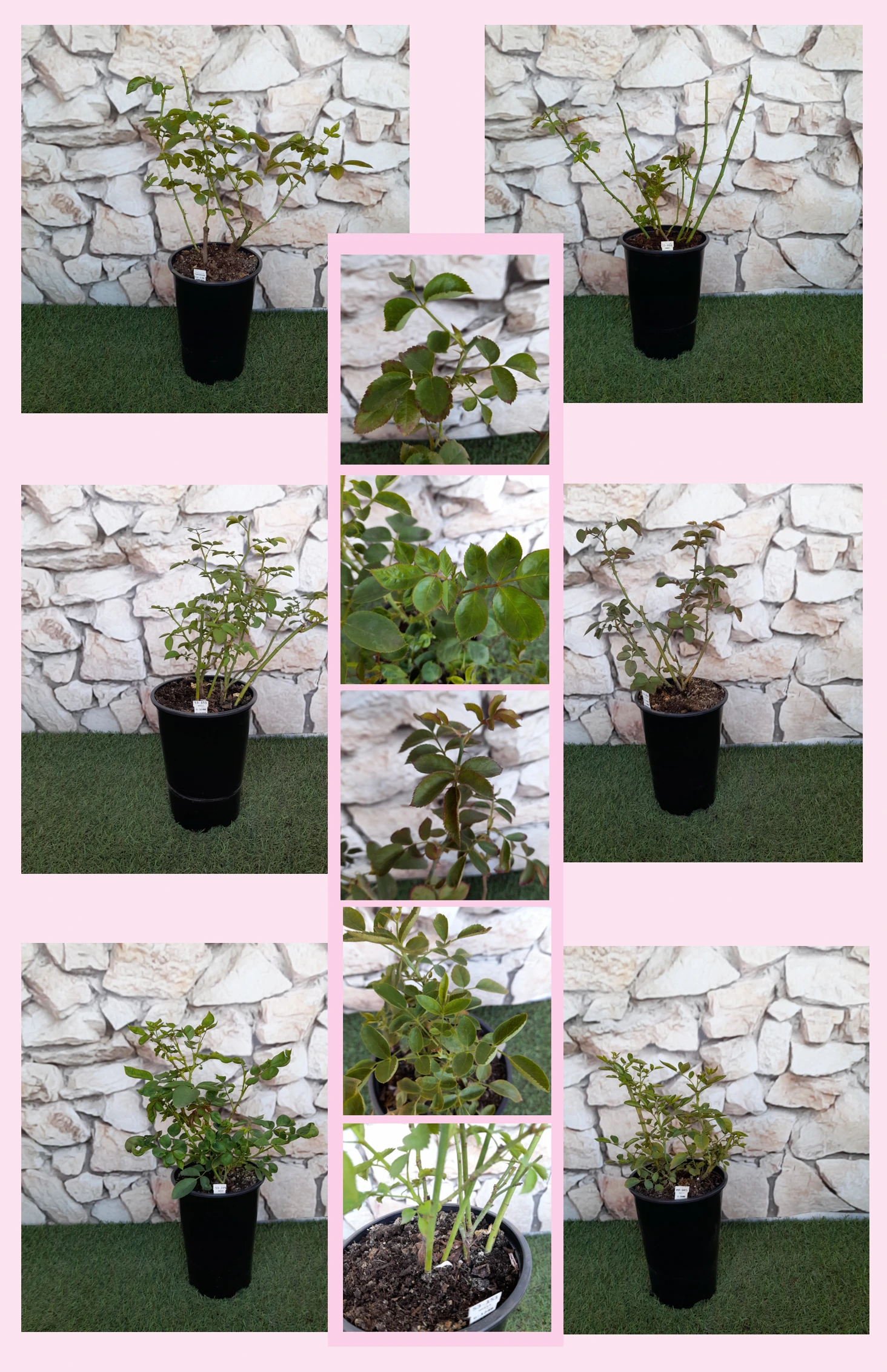
BERLINGOT™ – white-pink bedding floribunda rose – Dorieux
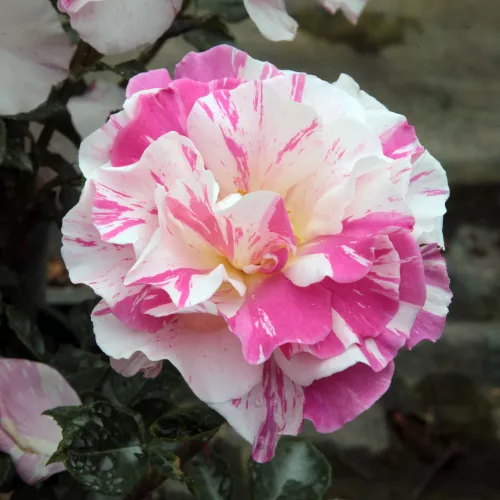
Step outside after a shower and let BERLINGOT™ greet you with cheerful, candy-striped blooms and a rich, fruity perfume that hangs in the moist Irish air. This compact floribunda is made for easy-going family gardens, coping gracefully with rainfall and cool summers while repeating in generous flushes of colour. Its bushy habit and light, glossy foliage create a soft, cottage-style backdrop for front paths and beds, whether in Dublin terraces or country plots. Own-root plants grow steadily into long-lived, reliable shrubs with secure roots, sturdy flowering framework and good recovery after pruning or weather damage. Plant once, then simply deadhead now and again, and watch it settle in: year by year, roots establish, shoots thicken and by the third season you enjoy its full ornamental impact with minimal fuss. Ideal for those who want fragrant, striped blooms without complicated gardening.
Usage options
| Target area | Reasoning |
|---|
| Front garden focal shrub |
The compact, bushy habit and 80–110 cm height make BERLINGOT™ a perfect “hello” rose beside the gate or front door, giving clear visibility of its playful stripes without overwhelming tight spaces in terraced streets, for busy homeowners. |
| Cottage-style mixed bed |
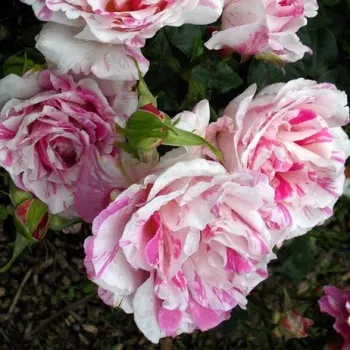
Clustered, medium-large blooms in white and purple-pink stripes repeat well, weaving easily among perennials and old-fashioned favourites to create a relaxed cottage look through much of the season, suiting romantic gardeners. |
| Low flowering hedge |
At 45 cm spacing BERLINGOT™ forms a soft, flowering line along paths or drives; consistent height and dense foliage give structure while the striped flowers add charm rather than formality, ideal for family gardens. |
| Statement container on patio |
In a large 40–50 litre pot with good drainage, its strong fragrance and repeat flowering can be enjoyed up close on balconies or patios, with own-root resilience giving long-term value in limited space for urban dwellers. |
| Feature in small lawn island bed |
Planted singly at about 90 cm clearance, the rounded shrub and eye-catching flowers stand out from all sides, turning a tiny island bed into a focal point that stays interesting from early summer onwards for beginner gardeners. |
| Family play garden border |
Medium maintenance and moderate prickliness make BERLINGOT™ manageable along fences or behind lower plants; simple deadheading and occasional treatments keep it looking well without demanding intricate care from busy parents. |
| Season-long colour near seating |
Strong, fruity fragrance noticeable from a distance and remontant blooms provide ongoing sensory interest beside a bench or terrace, particularly appreciated on damp evenings after showers, especially by fragrance lovers. |
| Reliable long-term planting scheme |
As an own-root floribunda, it builds a durable framework and can regenerate from the base after harsh winters, handling moist Irish conditions and steady rain without losing its place in the design, reassuring for long-term planners. |
Styling ideas
- Candy-Stripe Border – Line a narrow front path with BERLINGOT™ and soft blue Brunnera for a playful, cottage feel – perfect for small-city front gardens.
- Patio Perfume Pot – Grow one plant in a 40–50 litre terracotta pot by your seating area to enjoy its rich, fruity scent on damp evenings – ideal for balcony and terrace users.
- Soft Hedge Ribbon – Create a low, wavy hedge along the drive, repeating BERLINGOT™ with airy grasses to give structure without formality – suited to relaxed family plots.
- Clematis Companions – Pair with purple Clematis ‘Jackmanii’ on a discrete obelisk behind the rose, letting striped blooms play against velvety clematis flowers – appealing to colour-conscious plant lovers.
- Cottage Island Focus – Place one BERLINGOT™ at the centre of a small island bed, underplant with catmint and dwarf lavender for a simple, low-effort highlight – great for beginner gardeners.
Technical cultivar profile
| Property | Data |
|---|
| Name and registration |
Floribunda bedding rose; registered as DORmine, trade name BERLINGOT™ – white-pink bedding floribunda rose – Dorieux; bush rose for beds, borders and specimen planting. |
| Origin and breeding |
Bred by François Dorieux II, Pépinières et Roseraies Dorieux, France; cross of ‘Mimie Mathy’ × ‘New Imagine’; bred and introduced in 2010 as a modern striped floribunda. |
| Growth and structural characteristics |
Compact, bushy shrub 80–110 cm tall, 50–70 cm spread; dense, light to medium green glossy foliage with moderate prickles; suited to beds, low hedges and large containers. |
| Flower morphology |
Double, cupped, clustered blooms with 26–39 petals; large 7–10 cm flowers produced in trusses; remontant with a profuse second flush when regularly deadheaded. |
| Colour data and phenology |
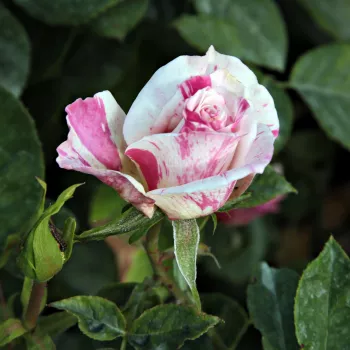
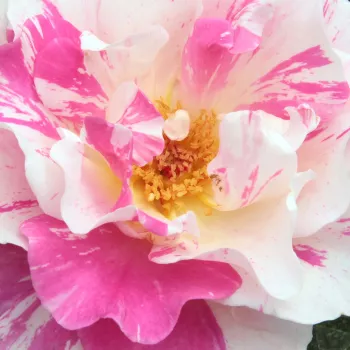
White to pale cream base with vivid purple-pink stripes and spots; RHS N155C outer, 63C inner; striping strongest on opening, gently fading in strong sun yet remaining attractively patterned. |
| Fragrance and aroma |
Rich, fruity fragrance, strong and noticeable from a distance in still or humid air; well suited to planting near paths, doors or seating where the scent can be fully appreciated. |
| Hip characteristics |
Poor hip set due to fully double flowers; occasional small spherical hips 10–14 mm across may appear, orange-red RHS 40B, but ornamental interest lies primarily in the blooms. |
| Resistance and winter hardiness |
Hardy to about −21 to −18 °C (USDA 6b, RHS H7); moderate disease resistance, may need protection in high-pressure seasons; average heat–drought tolerance, needing watering in long dry spells. |
| Horticultural recommendations |
Best in full sun with fertile, well-drained soil; space 55 cm in beds, 45 cm in hedges, 90 cm as specimen; use 40–50 litre pots for containers and deadhead to maintain repeat flowering. |
BERLINGOT™ combines compact, bushy growth, striking striped blooms and a strong fruity fragrance with the long-term security of an own-root plant, making it an easy, characterful choice for enduring Irish gardens.