BARGIRA® – yellow-pink hybrid tea rose – Barni
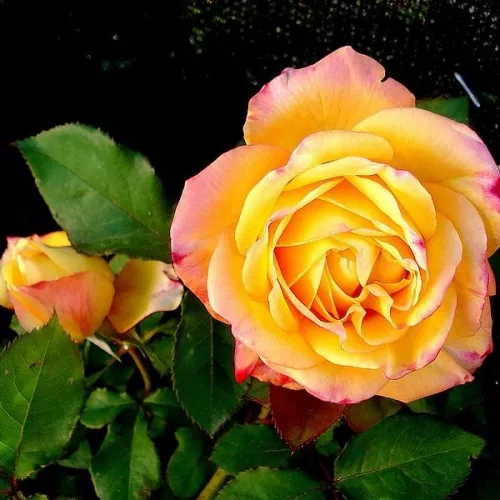
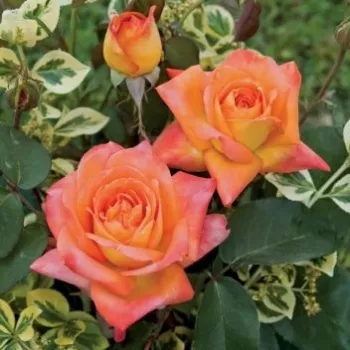
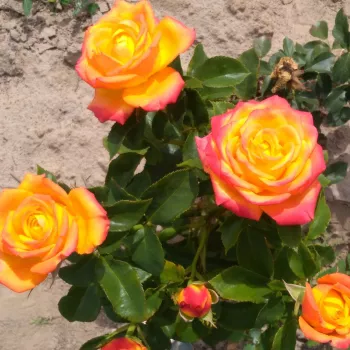
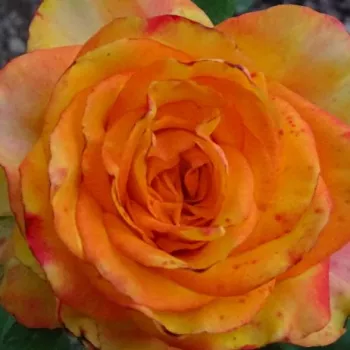
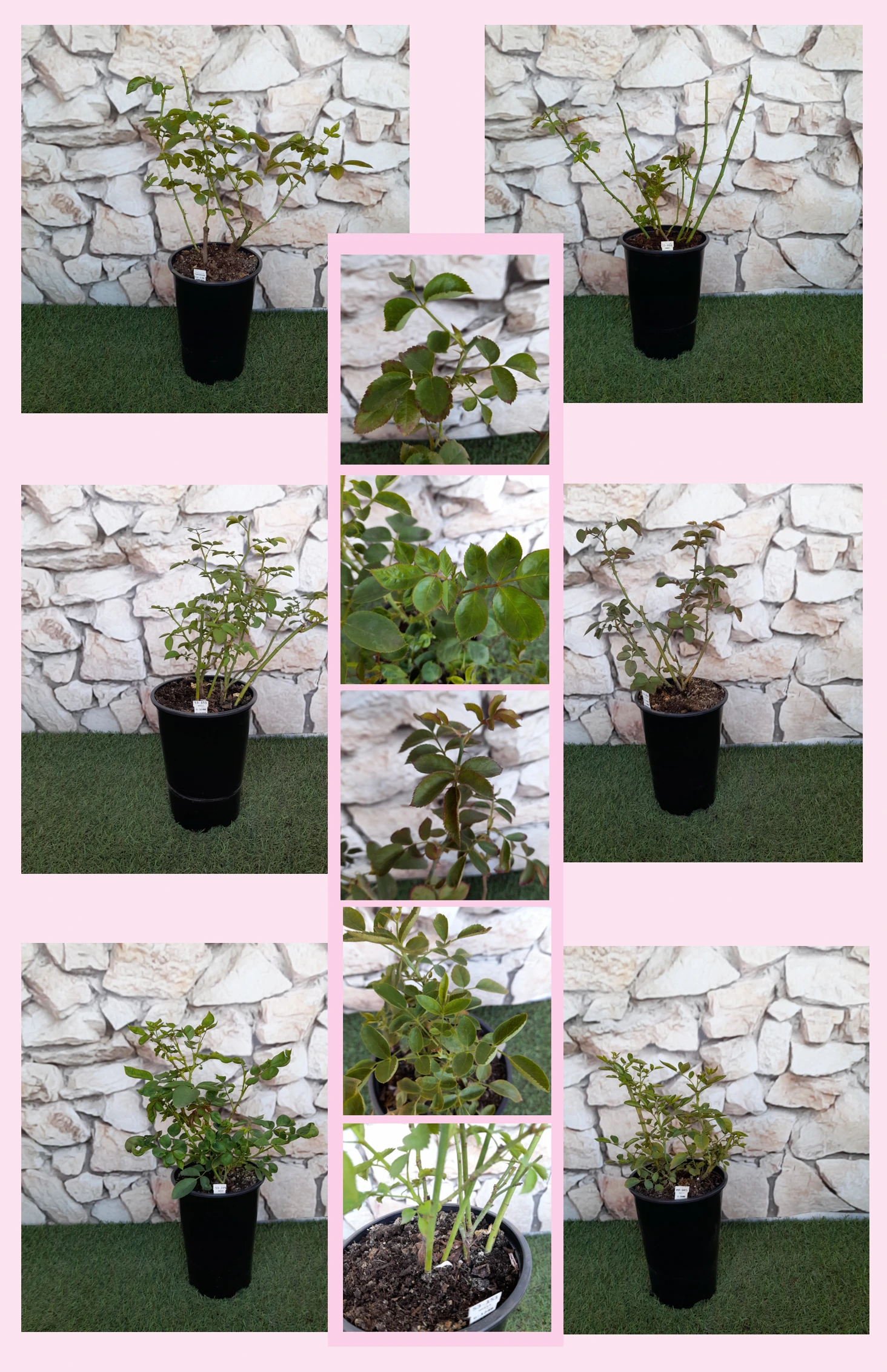
Like a walk in soft summer rain, BARGIRA® brings a mood of gentle contentment to Irish cottage borders and city front gardens, its large, high-centred blooms glowing in shifting sunlight. The petals open in a playful firework of golden-yellow, cream and raspberry-pink, a changing palette that looks as if it’s been painted fresh after every shower and breeze. Barely any thorns keep it pleasantly handleable near paths and doorways, while its upright, compact structure fits neatly into average family plots or generous containers. As an own-root rose, it matures steadily year by year, roots first, then shoots, before revealing its full garden character in the third season, coping well with our cool, damp summers and frequent rainfall that soften and enrich its colours.
Usage options
| Target area |
Reasoning |
| Feature rose by the front door |
The tall, upright habit and exhibition-style, high-centred blooms give an elegant welcome in a small Dublin terrace or suburban entrance. Planted as a single specimen near the step, its large, colour-changing flowers are easily appreciated at eye level, especially where you pass daily on the school run or commute – ideal for the busy homeowner. |
| Irish cottage-garden border |
The soft yellow and pink blend slips naturally into mixed cottage borders, pairing beautifully with blue Agapanthus or white obedient plant for a relaxed, “girly” look. Its moderate height layers well behind low perennials, giving structure without overwhelming the space – perfect for a nature-loving gardener. |
| Cutting patch for home bouquets |
As a hybrid tea selected for exhibition and cutting, BARGIRA® offers long-stemmed, large blooms ideal for vases on the kitchen table. With regular deadheading and feeding, you can pick repeatedly through the season, enjoying the changing petal colours indoors – rewarding for the creative florist. |
| Statement rose in a large container |
In a 40–50 litre pot with good drainage, its upright growth and glossy foliage make a tidy, showy feature on patios or balconies where ground planting is limited. The nearly thornless stems are easier to manage in tight spots around seating or play areas – convenient for the urban balcony-owner. |
| Own-root long-term garden investment |
Supplied on its own roots, BARGIRA® is not dependent on a graft union, so it can age gracefully without rootstock shoots or graft failure. If winter or pruning ever knock it back, it can regenerate reliably from its own base, supporting a long-lived, stable display – reassuring for the long‑term planner. |
| Planned, low-clutter rose bed |
Best for gardeners happy to give a little regular care, this rose responds well to intentional pruning, feeding and spraying where needed, repaying the attention with premium gold performance and neat structure. It suits a curated, well-kept bed rather than a no-maintenance corner – ideal for the dedicated enthusiast. |
| Weather-resilient focal point in wet summers |
The flowers hold their colour well and the plant is winter-hardy, suiting areas where summers are short and cool yet wet, with frequent showers and soft light that enhance its buttery yellow tones and pink edging – a good fit for the Atlantic-influenced Irish climate-gardener. |
| Structured mixed border with contrasting textures |
Glossy, dark green foliage and an upright outline give clear structure among looser perennials and ornamental grasses. Combine with Hypericum ‘Miracle’ or airy, pale companions to highlight the vibrant yellow-pink blooms and keep the border readable from a distance – helpful for the design-conscious planner. |
Styling ideas
- Cottage-Romantic – Thread BARGIRA® through a small cottage border with foxgloves, lavender and white obedient plant for a soft, feminine look – suited to nostalgic garden-lovers.
- Front-Door Focus – Plant one or three roses near the path with low evergreen edging so the large blooms act like warm lanterns guiding guests – ideal for sociable hosts.
- Patio-Showpiece – Grow it in a 40–50 litre terracotta pot with trailing thyme or lobelia, letting the upright rose provide height over a soft skirt of colour – perfect for balcony and patio owners.
- Cutting-Row Chic – Arrange a straight row at 60 cm spacing in a sunny strip so you can harvest long, straight stems for kitchen-table bouquets – appealing to home florists.
- Structured-Mix – Combine BARGIRA® with Hypericum ‘Miracle’ and ornamental grasses, using its glossy foliage and tall blooms as vertical accents in a modern mixed bed – great for design-minded gardeners.
Technical cultivar profile
| Property |
Data |
| Name and registration |
Hybrid tea rose, registered as BARgira, traded as Bargira® Le Toscane. Part of the Le Toscane collection, commercial hybrid tea type, premium gold merit rating for garden and cutting use. |
| Origin and breeding |
Bred by Enrico Barni, Rose Barni, Pistoia, Italy, in 2014, parentage unknown. Introduced commercially in 2019/2020 catalogues, with Roses Barni as initial distributor for European markets. |
| Awards and recognition |
Audience Award at Alterarosa, Avignon 2020, reflecting strong public appeal for its lively colour play and flower form, and supporting its use as a showy garden and exhibition hybrid tea. |
| Growth and structural characteristics |
Upright, bushy plant 75–105 cm high, 50–70 cm spread, with dense, glossy dark green foliage and barely thorny stems. Suited to borders, specimens and containers in average family gardens. |
| Flower morphology |
Hybrid tea, high-centred, pointed buds opening to large, double flowers 7–10 cm across with 26–39 petals. Solitary blooms on long stems, remontant with a notably abundant second flush in season. |
| Colour data and phenology |
Bright yellow with pink-edged transitions; inner petals golden yellow, outer ring cream-white, raspberry-pink margins. Colour code ARS yb; RHS 14B outer, 34A inner, fading gently to butter-yellow cream. |
| Fragrance and aroma |
No noticeable fragrance; assessed as unscented in garden use. Primarily grown for its visual impact and exhibition-style flower form rather than perfume, making it suitable where scent is not essential. |
| Hip characteristics |
Rose hips form only occasionally due to the double flower form; when present they are small, ovoid, orange-red, around 10–14 mm diameter, adding modest late-season ornamental interest without seeding around. |
| Resistance and winter hardiness |
Hardy to about −23 to −21 °C (USDA 6a, RHS H7, Swedish zone 3). Disease resistance moderate to weak, with susceptibility to rust and some mildew and black spot, requiring attentive protection in damp areas. |
| Horticultural recommendations |
Prefers full sun and fertile, well-drained soil with regular watering. Needs consistent feeding, deadheading and plant protection; not ideal for no-care spots but excellent where an intentional care routine is possible. |
BARGIRA® rewards intentional care with long-stemmed exhibition blooms, striking yellow-pink colour play and a stable, regenerating own-root habit, making it a thoughtful choice for gardeners ready to invest a little time.