St. Swithun – AUSwith English climbing rose on its own roots
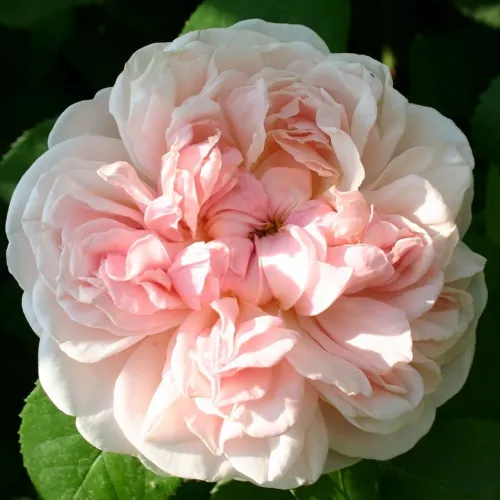
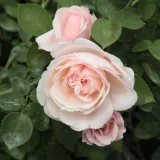
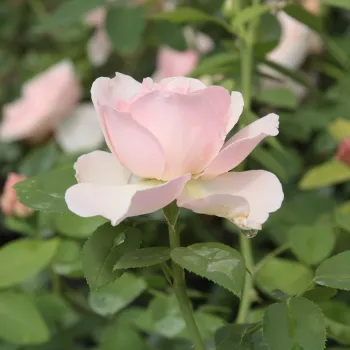
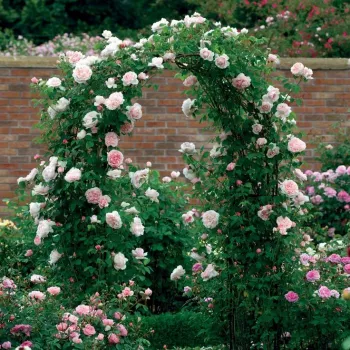
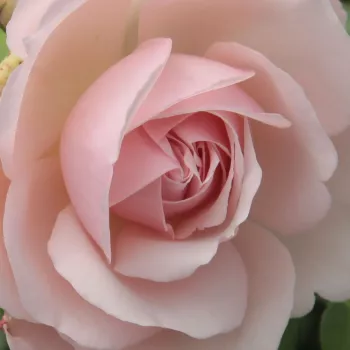
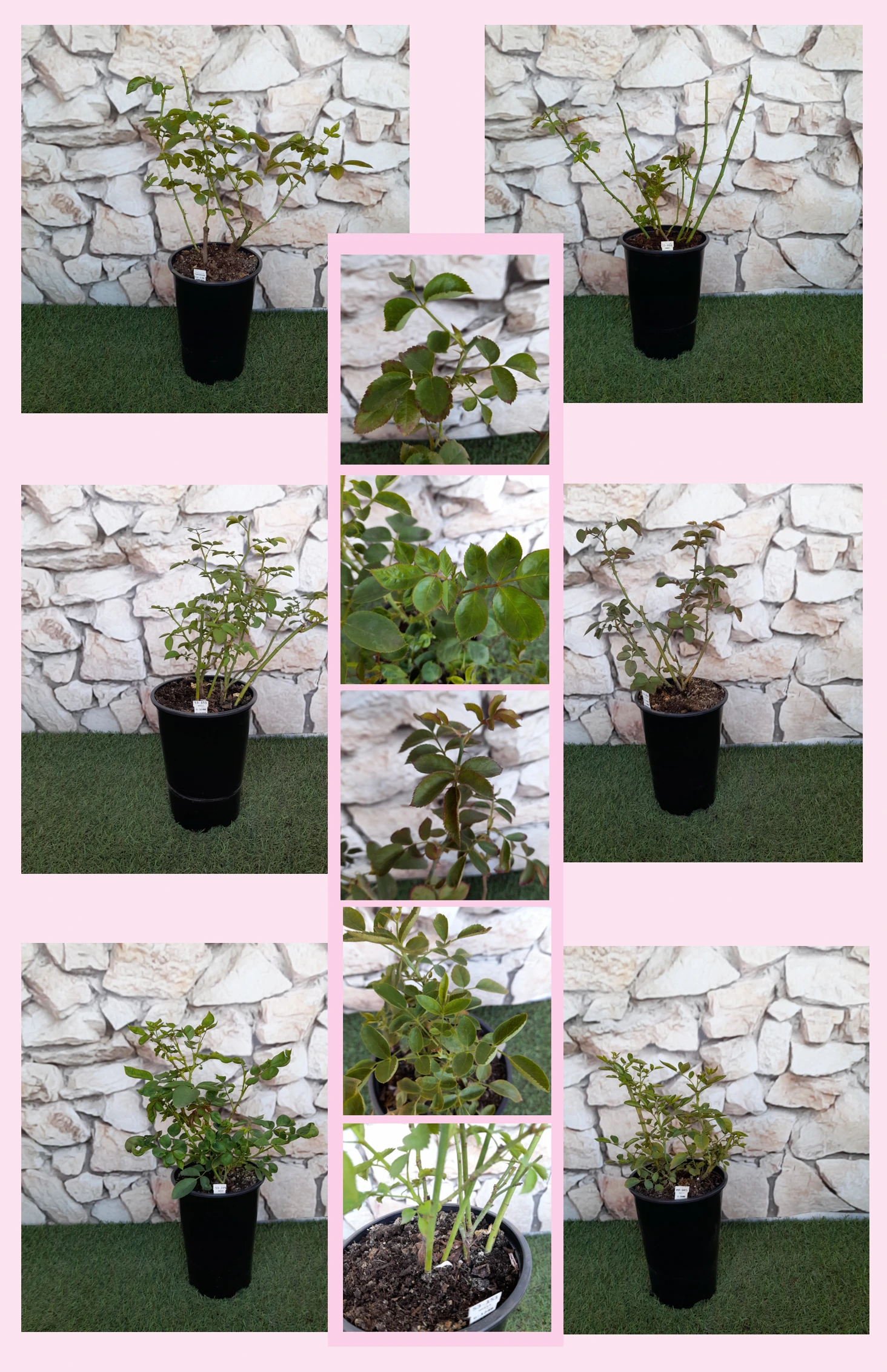
Soft, romantic and reassuringly dependable, St. Swithun wraps your front garden, cottage path or sunny wall in a cloud of petals and rich fragrance, even when summers are brief and rainfall is frequent. This English Rose rambler climbs with gentle grace, clothing arches, pergolas and fences in pastel, powder-pink rosettes that pale almost to white as they age, giving a constantly changing, light-filled display. Its strong, far-carrying, myrrh-like fragrance brings cheerful contentment to quick evening strolls after work, rewarding beginners and busy families with generous flowering from early summer and a very good second flush later on. Planted on its own roots, it develops steadily – first bedding in below ground, then building long, graceful shoots, and by the third season delivering its full cottage-garden charm and long-lived, steadily improving character.
Usage options
| Target area |
Reasoning |
| Cottage-style pergola or arch |
Its long, creeping canes and dense grey-green foliage are ideal for training over arches and pergolas, creating a soft, storybook entrance of pastel rosettes and scent in small Irish cottage gardens – perfect for the romantic-minded beginner. |
| Sunny house wall or tall fence |
Trained as a climber, it clothes walls and fences with large, very double blooms, offering reliable coverage and colour where space is narrow but height is available, even with our cool summers and regular showers – well suited to the practical urban homeowner. |
| Dublin terraced front garden focal point |
Used as a specimen on a strong obelisk or pillar, its large rosette flowers and strong perfume give maximum impact from a small footprint, creating a charming, “girly” welcome right at the front gate – ideal for fragrance-loving city gardeners. |
| Mixed shrub and perennial border |
Threaded through robust perennials, its soft pink tones blend easily with whites and mauves, and the long flowering season keeps the border interesting well into late summer, with only moderate maintenance – a good choice for relaxed family gardens. |
| Informal flowering screen or loose hedge |
Planted at wider spacing, its 2.4–3.4 m height and 1.6–2.4 m spread create a billowy, semi-transparent screen without feeling heavy, bringing privacy, flowers and scent along boundaries – attractive for nature-oriented boundary-conscious buyers. |
| Large container on patio or terrace |
In a generous 40–50 litre pot with good drainage, its moderate water needs and remontant flowering give a long season of pastel pink blooms close to seating areas, especially where borders are limited – convenient for time-poor balcony and patio owners. |
| Long-term feature plant for low-fuss gardens |
As an own-root shrub, it forms a stable framework that regenerates well after pruning or winter damage, ensuring a long lifespan and dependable flowering without complicated techniques – reassuring for busy, low-experience garden starters. |
| Lightly shaded corner with morning or dappled sun |
Tolerant of partial shade, it still flowers generously where sunlight is filtered, and copes well with the moist, fungus-prone air typical of Atlantic-influenced gardens, provided air circulation is decent – suitable for shade-challenged plot holders. |
Styling ideas
- Cottage-arch romance – Train St. Swithun over a wooden arch, underplant with lavender and catmint for a frothy pastel tunnel of scent – ideal for romantic cottage gardeners.
- Soft-city welcome – In a Dublin terrace, pair it on an obelisk with pale geraniums and low box edging to frame the front path – perfect for stylish urban homeowners.
- Pastel-pergola escape – Let its canes drape along a pergola, mixing with white clematis and Verbena hastata ‘White Spires’ for a light, airy look – suited to relaxed family gardens.
- Shaded-border glow – Use in a part-shaded border with ferns and pale hostas, where its soft pink blooms brighten dappled corners – good for gardeners dealing with tricky shade.
- Long-lived feature – Give an own-root plant a dedicated spot or 50 L container, renewing underplanting with violas and dwarf grasses as it matures – ideal for patient, low-maintenance planners.
Technical cultivar profile
| Parameter |
Data |
| Name and registration |
St. Swithun, English Rose shrub/rambling climber, registered as AUSwith. Trade names: Auswith English Rose AUSwith. American Rose Society exhibition name: St. Swithun. |
| Origin and breeding |
Bred by David C. H. Austin, United Kingdom, from unknown seedling × ‘Mary Rose’. Raised in Albrighton, introduced and registered in 1993 after UK breeding in 1992. |
| Growth and structural characteristics |
Strong, creeping climber to about 240–340 cm high and 160–240 cm wide. Moderately thorny shoots, dense grey-green, slightly glossy foliage (RHS 147A). Some spent blooms may need manual removal. |
| Flower morphology |
Large, very double rosette blooms, generally solitary, 7–10 cm across with 40+ petals. Repeats freely, with a notably abundant second flush in good conditions, suitable for cutting. |
| Colour data and phenology |
Soft pure pink flowers, centre RHS 65C, outer petals 65D. Buds mid-pink, opening powder-pink then fading to near white. Colour retention modest, but continuous opening keeps the plant attractive. |
| Fragrance and aroma |
Strong, far-reaching perfume with a full-bodied, myrrh-like character, typical of many English Roses. Suitable for seating areas and paths where fragrance can be fully appreciated. |
| Hip characteristics |
Generally sparse fruit set; occasional ovoid orange-red hips (RHS 37B), around 9–15 mm in diameter. Hips add minor late-season interest but are not a primary ornamental feature. |
| Resistance and winter hardiness |
Hardy to about -26 to -23 °C (RHS H7, USDA 5b, Swedish Zon 4). Moderate resistance to black spot, powdery mildew and rust; benefits from good air circulation and timely care in wet seasons. |
| Horticultural recommendations |
Best on fertile, well-drained soil; neutral to slightly acidic pH preferred. Water regularly in dry spells, mulch to protect roots. Space 140–220 cm depending on use; supports needed for training. |
St. Swithun (AUSwith) offers romantic pastel blooms, powerful fragrance and long-term stability on its own roots, making it a graceful, low-fuss feature rose worth choosing with confidence.