Sweet Juliet – AUSleap English shrub rose on own roots
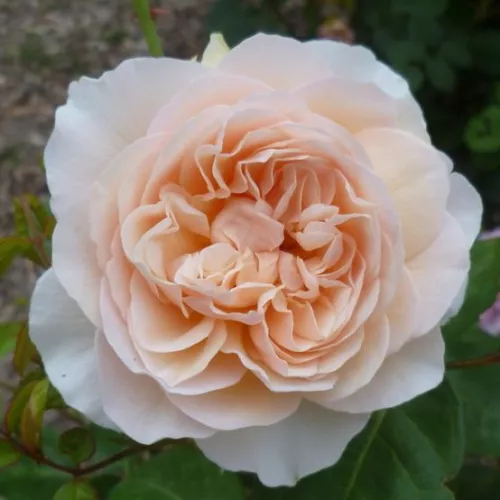
Soft apricot-pink blooms, a strong, fruity fragrance and a gentle cottage-garden look make Sweet Juliet a charming choice for Irish family gardens that often face persistent rain and heavy soil conditions. This David Austin English shrub rose offers generous repeat flowering from early summer well into autumn, bringing warm colour to small front gardens and mixed borders alike. Planted on its own roots in our easy-handling 2‑litre container, it settles in reliably and develops into a long-lived, medium-sized shrub with dense, mid-green foliage. With a little attention to drainage and light deadheading, you can enjoy consistent, premium quality and graceful, cup-shaped blossoms that hold their colour beautifully in soft Irish light. Over the first three years it builds roots, then shoots, then full ornamental value for enduring garden romance.
Usage options
| Target area | Reasoning |
|---|
| Cottage-style mixed border |
The warm peach-pink blooms and classic English shrub shape bring a romantic cottage feel, pairing well with perennials and grasses while remaining manageable in size for typical Irish family borders, especially appealing to beginners. |
| Fragrant front garden near entrance |
Its strong, fruity perfume is most appreciated along a front path or doorway, where repeated flushes of blossom provide daily enjoyment without complex care, ideal for busy urban homeowners who love fragrance. |
| Feature shrub in small lawn or patio bed |
An upright, medium-large shrub with dense foliage and repeated flowering makes a soft focal point; give it space at 180 cm as a specimen so the rounded form can develop fully for style-conscious homeowners. |
| Romantic hedge or loose screen |
Planted at about 110 cm apart, Sweet Juliet forms a gently informal, flower-laden hedge with mid-green leaves that look refined even between flushes, suiting those who want privacy with a touch of elegance. |
| Cut-flower corner in family garden |
The very full, cup-shaped blooms on cluster stems are excellent for cutting, offering classic English-rose form and scent from summer to autumn, rewarding hobby gardeners who enjoy arranging home-grown bouquets. |
| Rain-tolerant bed in heavier Irish soils |
With reasonable vigour and moderate disease tolerance, it copes well where summers are cool, damp and breezy, provided you add drainage and mulch, reassuring gardeners in typical Irish weather conditions. |
| Long-term structural planting around terraces |
As an own-root shrub it establishes steadily, then matures into a durable, regenerating framework that maintains its character for many years, ideal for those planning a long-lived family garden investment. |
| Large container on sheltered patio |
In a 40–50 litre pot with good compost and regular watering, its repeat flowering and strong scent create a cosy “walk in the rain” atmosphere on balconies and terraces for time-poor urban rose lovers. |
Styling ideas
- COTTAGE-PEACH BORDER – Combine Sweet Juliet with chives, foxgloves and soft grasses for a relaxed, pastel cottage border – for lovers of informal, romantic gardens.
- FRAGRANT FRONT EDGE – Line a short front path with low perennials and this rose as the scented highlight – for homeowners wanting charm from gate to doorstep.
- EVENING-TEA CORNER – Place one shrub in a small lawn island with lavender and a bench nearby – for those who enjoy quiet, scented evening breaks.
- SOFT SCREEN HEDGE – Create a loose, flowering hedge with Sweet Juliet interplanted with English bluebeard – for gardeners seeking privacy with colour and texture.
- LARGE-POT ROMANCE – Grow it in a 50 litre terracotta pot with trailing thyme around the base – for balcony and patio owners short on space but keen on roses.
Technical cultivar profile
| Property | Data |
|---|
| Name and registration |
Sweet Juliet (Ausleap), English shrub rose, Rós rómánsúil group; ARS exhibition name Sweet Juliet; registered as AUSleap within the English Rose Collection. |
| Origin and breeding |
Bred by David C. H. Austin, UK, 1989; parentage ‘Graham Thomas’ × ‘Admired Miranda’; introduced after 1993 by David Austin Roses Ltd in the English Rose range. |
| Awards and recognition |
Recognised for its scent and garden value; notable success includes the Belfast Fragrance Award (1992), reflecting its richly perfumed character and romantic appeal. |
| Growth and structural characteristics |
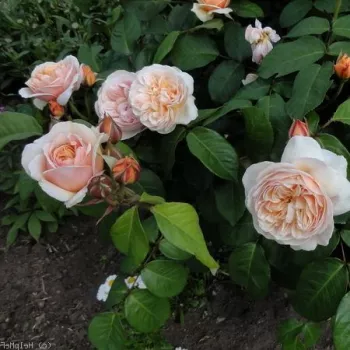
Upright shrub, around 110–170 cm high and 90–150 cm wide; dense, mid-green, glossy foliage; moderately thorny shoots; forms a full, bushy outline over time. |
| Flower morphology |
Medium-sized, 4–7 cm, very full, rosette to cup-shaped blooms with 40+ petals; borne in clusters; remontant, with abundant first flush and generous repeat flowering. |
| Colour data and phenology |
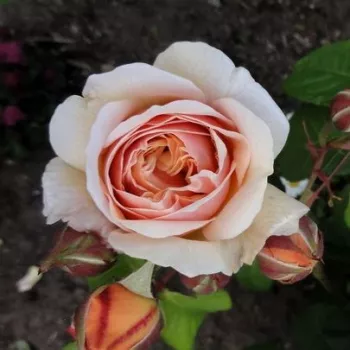
Bud deep peach-orange; opening to salmon-peach with pale pink edge; pre-fade pastel cream-peach; ages to lighter apricot, sometimes yellowish; ARS ab, RHS 28C outer, 24D inner. |
| Fragrance and aroma |
Strong, richly scented rose with a sweet, fruity fragrance character; ideal for planting where people pass close by or for cutting and bringing indoors for perfume. |
| Hip characteristics |
Rose-hip set generally low due to very double flowers; where formed, hips are small, ellipsoidal, bright red, about 9–15 mm in diameter, mainly of ornamental interest. |
| Resistance and winter hardiness |
Hardy to about –21 to –18 °C (RHS H7, USDA 6b); moderate resistance to black spot, mildew and rust; benefits from good air circulation and regular watering in dry spells. |
| Horticultural recommendations |
Best in sunny sites with drained, fertile soil; spacing 110–180 cm depending on use; medium maintenance, including occasional pest control and deadheading to keep plants tidy. |
Sweet Juliet (AUSleap) offers rich fragrance, repeat flowering and enduring own-root strength, making it a thoughtful, long-term choice for those who value quietly romantic garden spaces.