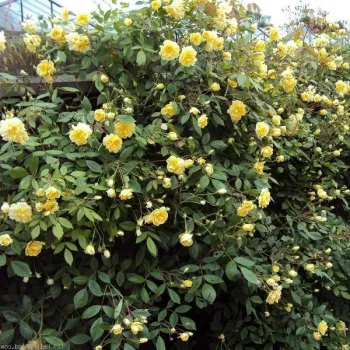
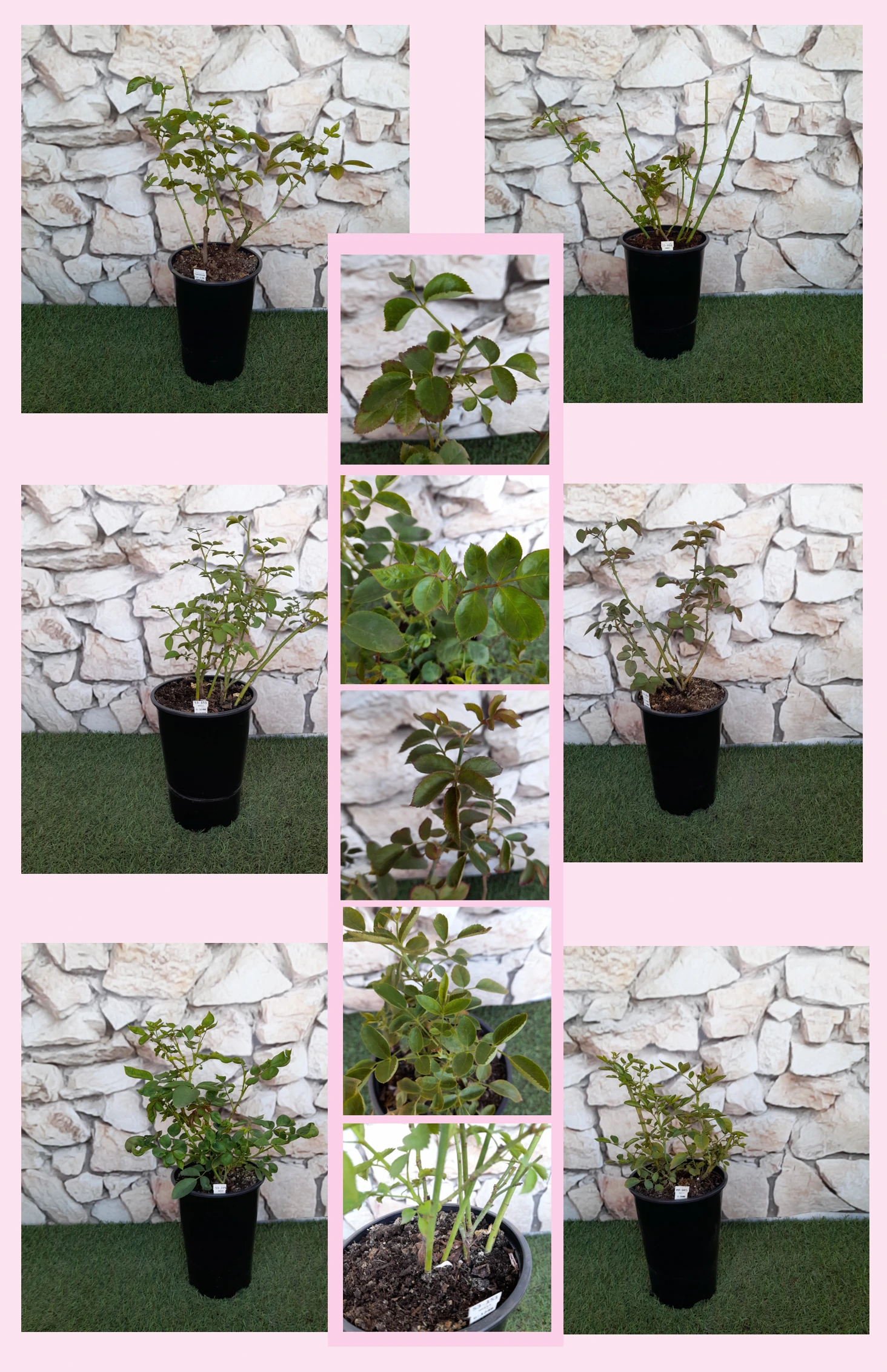
Malvern Hills – AUSCANARY yellow climbing rose
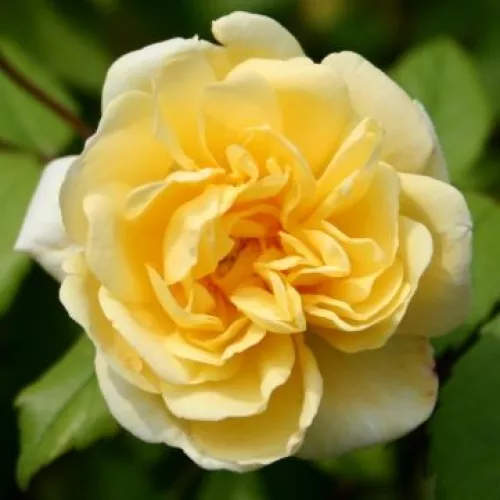
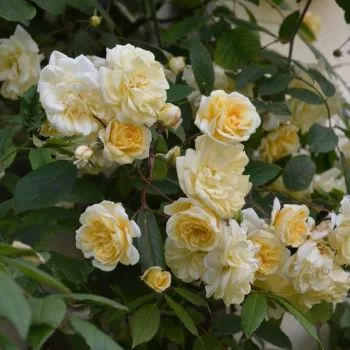
Imagine stepping outside for a short stroll after the rain, soft light filtering through leaves as buttercup blooms of ‘Malvern Hills’ glow against the garden greens, their muscat sweetness drifting on the air. This compact English climber is ideal for Irish cottage gardens and neat Dublin terraces, thriving even where breezes bring Atlantic freshness and regular showers. Small, cupped clusters of flowers repeat through summer, creating a gently romantic backdrop along arches, walls or fences without overpowering a modest space. Own-root planting supports a naturally durable framework that can be pruned and renewed over time, giving a quietly reassuring presence that settles in with minimal fuss as it matures into a long-lived part of your garden’s everyday rhythm.
Usage options
| Target area | Reasoning |
|---|
| Small cottage-garden arch |
The moderate height and airy clusters of medium-sized flowers suit a graceful arch without overwhelming a narrow path, giving repeated flushes of lemon-yellow that feel light rather than heavy in a compact Irish cottage setting – perfect for the relaxed romantic gardener. |
| Dublin terraced-house front fence |
Its climbing habit fits beautifully along a low to medium fence, where regular pruning keeps growth tidy while the soft yellow rosettes add year-round structure and welcoming colour to the street side – ideal for image-conscious urban homeowners. |
| Wall-trained feature near a seating area |
Trained flat against a warm wall, the delicately sweet, muscat-like fragrance is easy to appreciate at close quarters, while repeat flowering ensures there is usually something to enjoy beside your bench or bistro set – suited to fragrance-loving garden visitors. |
| Pergola over a narrow side path |
The slightly thorny but manageable canes and dense medium-green foliage clothe overhead structures without creating an oppressive tunnel, giving dappled shade and gentle colour through summer – attractive for families who like a soft, green walkway. |
| Feature pillar at garden entrance |
Planted as a solitary specimen and trained up a strong pillar, this climber forms a vertical column of pastel yellow flowers that mark the gateway and subtly shift in tone as they age, offering a welcoming focal point – appealing to design-minded homeowners. |
| Container on sheltered patio (large planter) |
In a 40–50 litre container with good drainage and regular feeding, its manageable spread and repeat flowering pattern work well on patios where ground planting is limited, giving height without taking much floor space – helpful for busy balcony and courtyard gardeners. |
| Lightly shaded boundary fence |
Tolerant of partial shade, it can brighten a boundary that only receives sun for part of the day, where the soft yellow tones remain fresh and visible while its hardiness copes with cool, damp Irish conditions – reassuring for cautious beginner gardeners. |
| Long-term structural rose in family garden |
As an own-root plant it is capable of regenerating from the base after pruning or weather damage, gradually building a stable framework that will carry flowers year after year despite Ireland’s frequent rain and breezy spells – comforting for long-term garden planners. |
Styling ideas
- Cottage-arch – Pair with bearded irises and nettle-leaved bellflower at the base to echo soft yellows and lilacs under a romantic arch – for lovers of traditional Irish cottage charm.
- Front-fence – Train along black railings with feather reed grass in front to contrast feathery verticals against rounded yellow blooms – for city homeowners wanting a refined street presence.
- Pastel-courtyard – Grow in a large terracotta pot with pale herbs and low grasses to create a gentle, sun-washed feel on sheltered patios – for balcony and courtyard gardeners.
- Entrance-pillar – Combine with white or cream perennials at the base to highlight the pastel yellow column of blooms by the gate – for those who like a softly formal welcome.
- Shaded-boundary – Soften a part-shaded fence with this climber and underplant with woodland-style perennials in cool tones – for nature-oriented families seeking a relaxed, leafy backdrop.
Technical cultivar profile
| Parameter | Data |
|---|
| Name and registration |
Climbing English Rose; registered as AUScanary, traded as Malvern Hills, Auscanary English Rose. ARS exhibition name Malvern Hills, large-flowered climber classification for show purposes. |
| Origin and breeding |
Bred by David C.H. Austin, United Kingdom; unnamed seedling × unnamed seedling. Introduced and registered in 2000 by David Austin Roses Ltd., continuing the English Rose climber line. |
| Awards and recognition |
Recipient of the RHS Award of Garden Merit, indicating reliable garden performance, sound ornamental value and stable characteristics under typical United Kingdom and similar temperate-climate conditions. |
| Growth and structural characteristics |
Vigorous climbing habit, around 300–500 cm high with 80–140 cm spread. Slightly thorny, densely foliaged with glossy medium-green leaves, suitable for training on arches, fences, walls and pergolas. |
| Flower morphology |
Medium-sized, double, cup-shaped blooms with 26–39 petals, borne in clustered inflorescences. Repeats through the season, with the second flush generally lighter than the main early-summer display. |
| Colour data and phenology |
Soft, even butter-yellow flowers, ARS code dy, RHS 11C–11D. Buds deep golden-yellow with greenish tips; colour gradually lightens in strong sun to creamy pastel yellow with paler petal edges as blooms mature. |
| Fragrance and aroma |
Mild but distinct fragrance with a delicately sweet, muscat-like character. Best experienced at close range around seating or paths, adding a gentle scented layer rather than a powerful perfume presence. |
| Hip characteristics |
Occasional small ovoid red hips, about 8–13 mm in diameter, forming mainly where flowers are not deadheaded; provide subtle autumn decorative interest but are not usually produced in abundance. |
| Resistance and winter hardiness |
Very sensitive to black spot, powdery mildew and rust, so benefits from preventive care. Winter hardy to about -26 – -23 °C (RHS H7, USDA 5b), coping well with most Irish cold conditions. |
| Horticultural recommendations |
Best on fertile, well-drained soil; avoid waterlogging. Requires regular watering in drought, feeding, pruning and plant protection. Recommended spacing 140–225 cm depending on use; supports needed for training. |
Malvern Hills (AUSCANARY) offers romantic pastel-yellow clusters, a gentle muscat fragrance and a regenerating own-root habit that rewards patient care; consider it where you’d enjoy a long-lived, characterful climbing rose.