AUSBAKER – yellow climbing rose – Austin
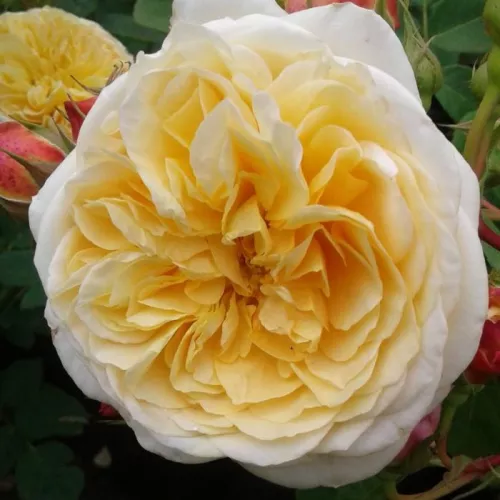
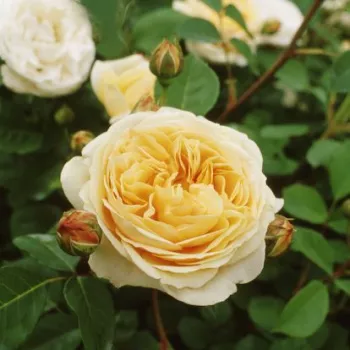
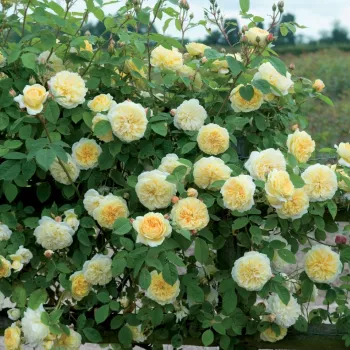
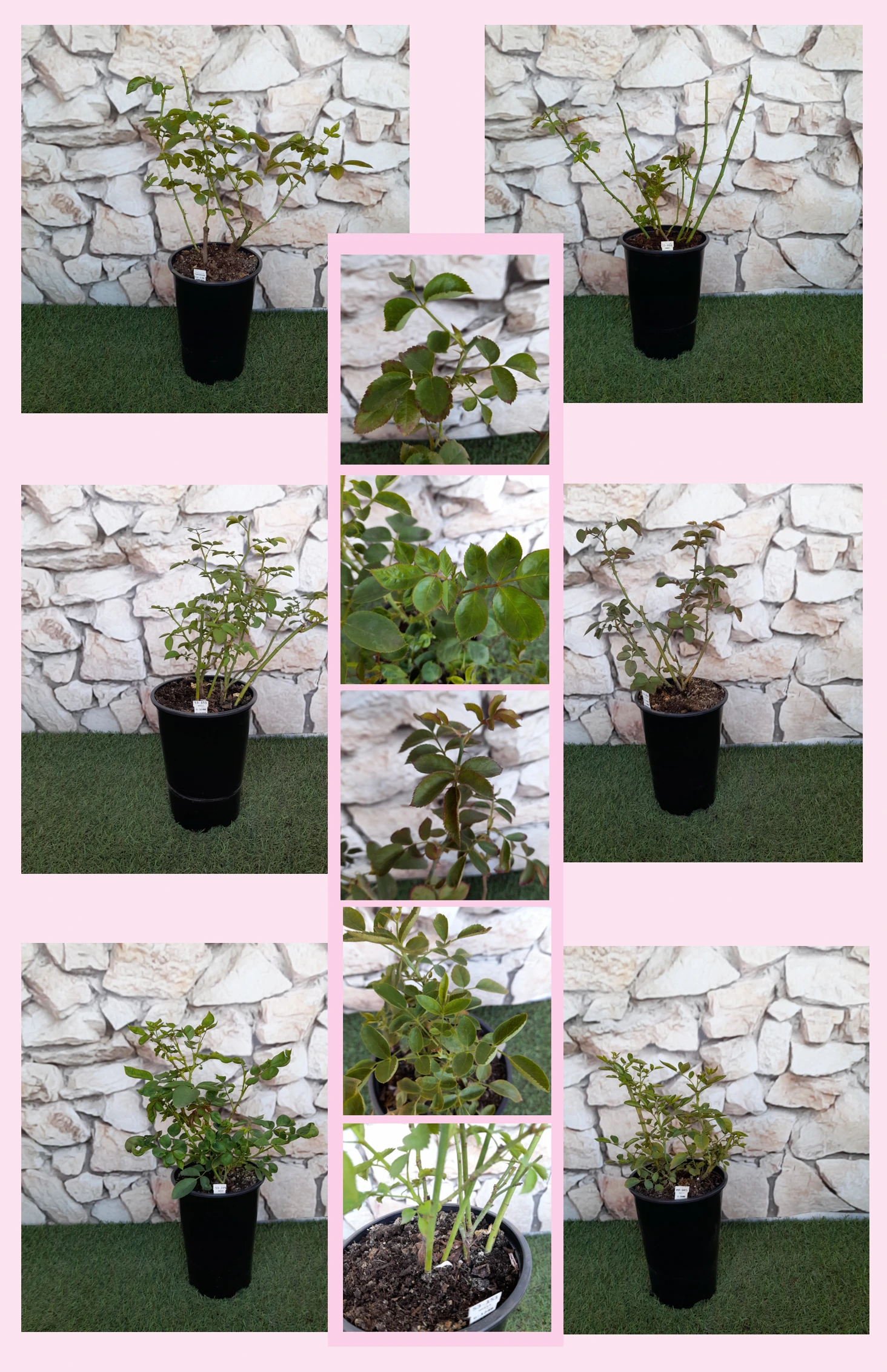
Imagine stepping outside for a short walk beneath soft rain, where the rich golden blooms of Teasing Georgia glow against dark foliage and lend a feeling of gentle contentment. This own-root climber settles in reliably, ideal for Irish cottage and terraced front gardens where rainfall is frequent and summers are short yet mild. Large, very double blossoms with a strong tea-myrrh fragrance open deep yellow, then soften to buttery and creamy tones for a romantic, two-toned display on a bushy, flexible framework that clothes arches, walls and pergolas. Though it appreciates regular care and good air circulation, in return it rewards you with abundant repeat flowering from early summer well into autumn. Planted in a well-drained, mulched bed, its own roots support a long-lived, regenerating structure, building up from roots in year one, shoots in year two and full ornamental value by year three, so you can enjoy enduring garden character with reassuring ease.
Usage options
| Target area |
Reasoning |
| Cottage-style front garden arch or arbour |
Teasing Georgia’s romantic rosette blooms and soft yellow tones suit a “girly” cottage look over an arch or arbour near the front gate. Train the flexible canes horizontally for more flowering spurs and enjoy scented pass-throughs for beginners. |
| South- or west-facing wall or house façade |
Use it to soften brick or render with warm, golden flowers that fade gracefully to cream. On an airy, sunny wall, regular pruning and deadheading keep disease in check and flowering strong, rewarding steady but simple care for busy-owners. |
| Family patio pergola or seating area |
Its strong tea and myrrh perfume creates a scented “roof” above family seating. Provide sturdy supports and tie in new growth; in a typical Irish summer, sheltered structure and drainage help manage damp air for urban-gardeners. |
| Large feature container by entrance or terrace |
In a 40–50 litre pot with quality compost and good drainage, this own-root climber can be grown near a doorway for close-up fragrance. Container culture allows better control of soil and watering, suiting space-limited homeowners. |
| Mixed flower bed with perennials in a small garden |
Let its bushy base mingle with daylilies and phlox, where its golden-yellow flowers contrast beautifully with purples and oranges. Good air movement and careful spacing help in regions where frequent rain and mild humidity favour disease for hobby-gardeners. |
| Screening along a low fence or boundary |
Its dense foliage and moderate height help create a soft, flowering screen for privacy. Tie canes along wires or rails, and use own-root resilience for long-term regeneration after hard pruning, supporting low-fuss garden structure for families. |
| Rose bed focal point as a solitary specimen |
Planted alone with 2 m space, its premium, award-winning character stands out. Repeat flushes of large, double flowers keep the bed interesting over the season, making it a satisfying focal plant for fragrance-loving collectors. |
| Small park or shared residential green space |
Where regular but scheduled maintenance is possible, its natural, bushy growth and refined colour shifts provide long-term ornamental value. Own-root planting means a stable presence that responds well to renewal pruning for communities. |
Styling ideas
- Cottage Archway – Train Teasing Georgia over a rustic metal or timber arch, underplant with Phlox paniculata and soft grasses for a romantic, flower-framed path – ideal for cottage-style romantics.
- Sunny Facade – Fan its canes across a warm, south-facing wall, pairing with Lonicera nitida ‘Maigrün’ groundcover to hide the base and create a textured green-and-gold tapestry – perfect for neat front gardens.
- Perfumed Pergola – Grow along a pergola beam above a seating area, adding scented herbs and lavender below for layered fragrance and easy evening enjoyment – great for fragrance enthusiasts.
- Golden Container – Use a 50 litre terracotta pot with an obelisk, surrounding the base with trailing ivy or seasonal bedding for year-round interest – suited to balcony and terrace dwellers.
- Soft Screen – Plant along a low fence, weaving stems on wires and interplanting with daylilies for colour at the base while the rose creates a gentle, semi-private screen – ideal for family gardens.
Technical cultivar profile
| Trait |
Data |
| Name and registration |
Registered as AUSbaker, marketed as Teasing Georgia (Ausbaker English Rose). Large-flowered climbing rose in the Rós dreapadó group, shrub/park exhibition category for garden and show use. |
| Origin and breeding |
English Rose bred by David C. H. Austin, United Kingdom, from ‘Charles Austin’ × unknown seedling. Bred 1987, registered 2000, introduced after 2000 by David Austin Roses Ltd, Albrighton. |
| Awards and recognition |
Holds the RHS Award of Garden Merit and the Henry Edland Medal for fragrance (RNRS, 2000), along with additional national and international competition honours confirming strong ornamental quality. |
| Growth and structural characteristics |
Climbing shrub with bushy habit, 180–270 cm high and 90–140 cm spread. Dense, dark green, slightly glossy foliage, moderately thorny canes; self-cleaning is moderate, so some deadheading is beneficial. |
| Flower morphology |
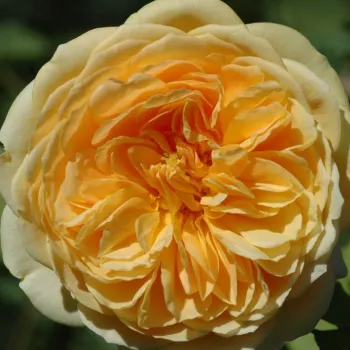
Very double, rosette-shaped blooms, usually solitary on stems, with more than 40 petals and large 7–10 cm diameter flowers. Strongly remontant, producing an abundant second flush in suitable conditions. |
| Colour data and phenology |
Rich golden-yellow flowers with pale lemon outer petals (RHS 11D, 14A). Buds medium yellow with greenish tint; blooms open deep yellow, then fade through buttery tones to creamy, two-toned effects over time. |
| Fragrance and aroma |
Strong, noticeable perfume combining classic tea rose notes with a distinct myrrh character. Best appreciated when planted near paths, doors or seating areas where regular close-up scent enjoyment is possible. |
| Hip characteristics |
Occasionally sets small spherical orange-red hips, around 8–12 mm across. Decorative effect is modest; hips are a secondary feature compared with the variety’s large, full, repeat-flowering blossoms. |
| Resistance and winter hardiness |
Hardy to about −26 to −23 °C (USDA 5b, RHS H7, Swedish Zone 4). Disease resistance is sensitive, with susceptibility to black spot and rust, so regular preventive care and good air movement are recommended. |
| Horticultural recommendations |
Suited to walls, fences, pergolas, arches, flower beds, solitary planting and parks. Prefers fertile, well-drained soil, regular watering in dry spells, partial shade tolerance, and attentive plant protection routines. |
AUSbaker offers richly scented golden blooms, repeat flowering and long-lived own-root reliability; consider it if you would like an elegant, climbing highlight that rewards steady but straightforward care.