AMERICAN PILLAR – pink rambler climbing rose – Van Fleet
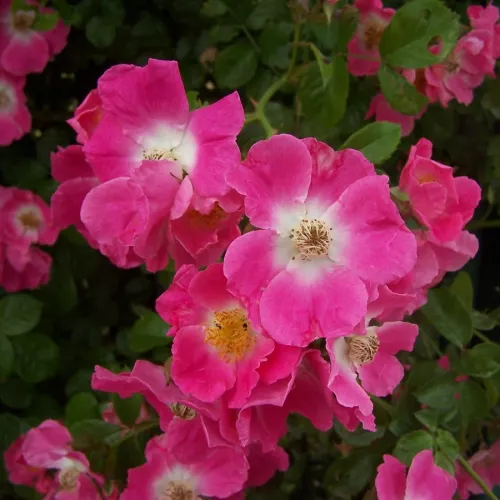
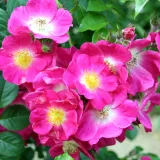
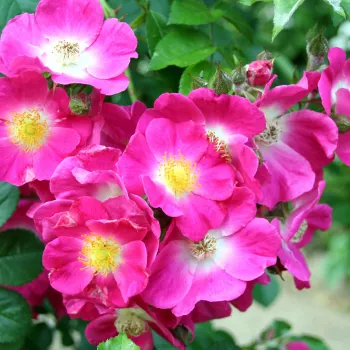
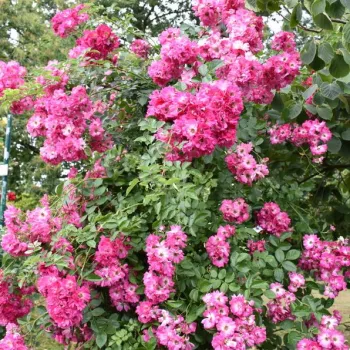
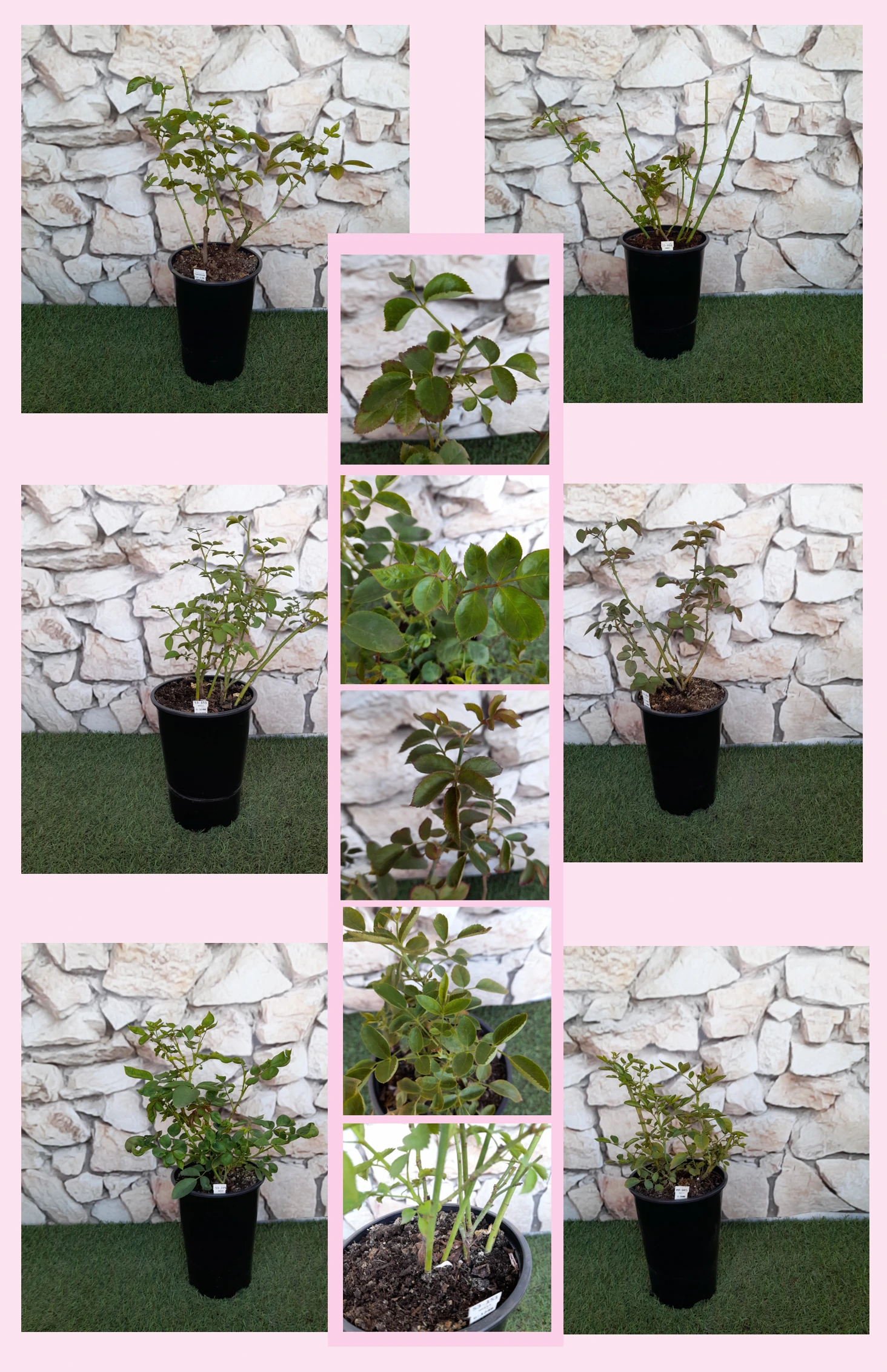
Step out to soft Irish light and gentle rain with ‘American Pillar’, a classic rambler that dresses walls, garages and old fences in cascades of cyclamen-pink, white-eyed blooms. Its open flower clusters create a lively, cheerful midsummer curtain that is buzzing with bees and other visitors, yet it asks for remarkably little in return. Once established on a simple wire or pergola, this vigorous climber quickly forms a leafy, natural green screen that copes well with damp weather and the kind of rainfall-soaked, clay-based gardens many Irish homes have. Planted on its own roots in our pharmaROSA® ORIGINAL 2-litre pot, it settles in steadily and rewards a patient arc of development – first roots, then shoots, then full presence – offering dependable structure and longevity for cottage-style or terraced front gardens. Enjoy its self-cleaning clusters, glowing autumn hips and easy-care character as it matures into a tall, columnar feature, softening boundaries with a wash of colour and quietly supporting pollinators all season long.
Usage options
| Target area |
Reasoning |
| Front garden boundary fence in a Dublin terrace street |
Dense, dark green foliage and long canes turn a plain fence into a soft, living screen, giving privacy without feeling closed-in. The vigorous habit covers vertical space quickly, bringing cottage-garden charm to compact plots and suiting the tastes of the city-front-garden owner. |
| Traditional Irish cottage wall or gable end |
Once-blooming clusters of cyclamen-pink and white flowers create a spectacular midsummer display that reads beautifully against stone or render. After flowering, the tidy, self-cleaning habit means spent petals fall away unaided, minimising upkeep for the low-maintenance gardener. |
| Pergola, arch or arbour over a garden path |
The tall, climbing growth happily clothes pergolas and arches, forming a romantic tunnel of colour during its main flush. Good foliage density and manageable maintenance make it a practical choice for framing paths where children and visitors pass, appealing to the family-garden owner. |
| Wildlife-friendly corner or informal hedge |
Single, open blooms with exposed yellow stamens are easy for bees to work during flowering, while the abundant red hips in autumn provide structure and seasonal interest. Together they support garden biodiversity, which resonates strongly with the nature-oriented buyer. |
| Clay soil bed with improved drainage along a garden edge |
This robust rambler tolerates typical Irish conditions when planted into well-drained, enriched clay, where its own-root system can spread deeply and anchor the plant for decades. Once established, it takes short dry spells in its stride, reassuring the time-pressed homeowner. |
| Freestanding specimen on a sturdy obelisk or tall post |
Trained on a strong support, its tall, columnar habit becomes a striking focal point, with a dramatic midsummer curtain of colour that then recedes into glossy green foliage. The predictable, single main flush keeps care routines simple for the beginner gardener. |
| Large container on a sunny patio or gravel area |
In a 40–50 litre or larger pot with good drainage, this rose can be grown where soil is poor or paving dominates, bringing vertical greenery and seasonal bloom close to the house. Occasional feeding and watering are usually enough for the busy urban gardener. |
| Park-style, naturalistic corner in a larger family garden |
Allowing the long canes to sweep and mingle with shrubs and perennials creates a relaxed, natural look that suits informal spaces. Its vigorous, own-root growth rebuilds well from pruning, giving long-term structure in areas often exposed to wet, breezy weather that mirrors Ireland’s frequent rain, which is reassuring for the long-term planner. |
Styling ideas
- Cottage-Fence Cascade – Train along a low timber fence with foxgloves, lady’s mantle and geraniums beneath for a pink-and-soft-yellow froth – ideal for lovers of nostalgic cottage style.
- Front-Door Welcome – Lead the canes over an arch by the front path, underplanting with lavender and catmint to echo the bee-friendly theme – perfect for fragrance-seeking city residents.
- Wildlife Ribbon – Let it scramble along a wire fence with hawthorn, hips and native grasses nearby to create a wildlife corridor – suited to nature-focused family gardeners.
- Patio Statement – Grow in a 50-litre half-barrel with a tall obelisk, surrounded by terracotta pots of herbs for a green, usable outdoor room – for busy homeowners who want quick impact.
- Naturalistic Backdrop – Use as a tall screen behind a loose mix of ornamental grasses, obedient plant and Japanese spindle for movement and year-round structure – appealing to fans of relaxed, meadow-like planting.
Technical cultivar profile
| Property |
Data |
| Name and registration |
Trade name American Pillar Climbing rose Van Fleet; rambler, Hybrid Wichurana group; exhibition climbing rose; no formal registered name recorded; own-root container-grown for garden use. |
| Origin and breeding |
Bred by Walter Van Fleet in the United States around 1902 from Rosa wichuraiana × Rosa setigera × unknown seedling; introduced 1908 by Conard & Jones Co. for the US Department of Agriculture. |
| Awards and recognition |
Recognised on the American show circuit as an ARS Climber, including awards from Charleston Rose Society and Philadelphia Rose Society in 2000 and Columbus Rose Society in 2001. |
| Growth and structural characteristics |
Very vigorous climbing rambler growing about 500–700 cm high and 250–400 cm wide; dense, glossy dark green foliage on heavily thorned canes; good self-cleaning of spent flowers with hips retained. |
| Flower morphology |
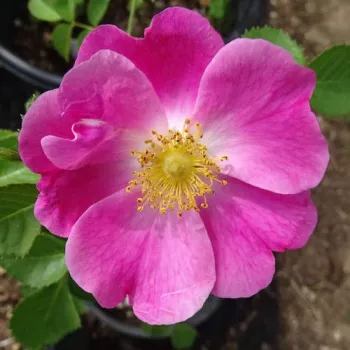
Medium-sized, flat, single to semi-double flowers with 5–12 petals, borne in large clusters; non-remontant, flowering once per season in a striking main flush that covers the plant generously. |
| Colour data and phenology |
Intense cyclamen-pink buds and petals with a pure white centre and yellow stamens; RHS 57A outer, NN155D inner; colour lightens to pale pink as blooms age while the white eye stays distinct. |
| Fragrance and aroma |
Fragrance is very weak, with only a faint fruity character detectable in close, warm conditions; this rose is grown mainly for its visual display and pollinator value rather than for strong scent. |
| Hip characteristics |
After flowering, produces numerous small, spherical red hips about 8–12 mm in diameter; these add autumn and early winter ornamental interest and can be left as a feature or pruned as desired. |
| Resistance and winter hardiness |
Hardy to approximately −26 to −23 °C (USDA 5b, RHS H7); good heat and moderate drought tolerance once established; powdery mildew resistant, with moderate susceptibility to black spot and rust. |
| Horticultural recommendations |
Best in sun or light shade with well-drained soil; allow ample space and sturdy supports; space 240–400 cm depending on use; own-root plants respond well to periodic pruning and rejuvenation. |
AMERICAN PILLAR offers vigorous height, spectacular cottage-style bloom and pollinator-friendly, hip-forming clusters on a durable own-root framework, making it a thoughtful choice for transforming boundaries and garden views.