AMADEUS® – red climbing rose – Kordes
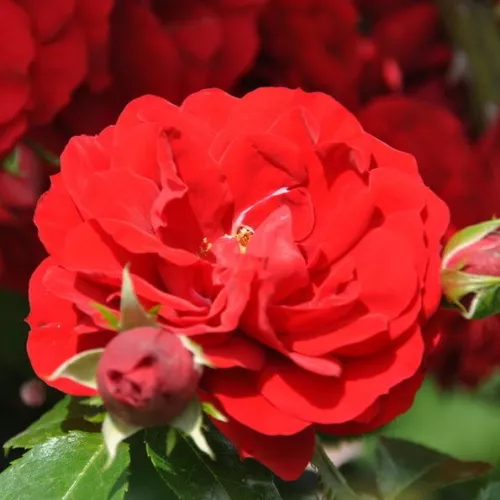
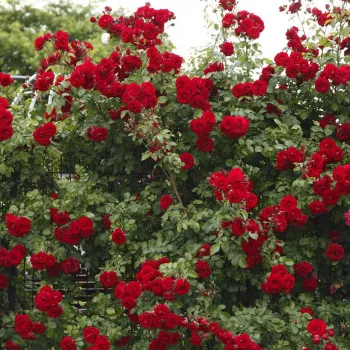
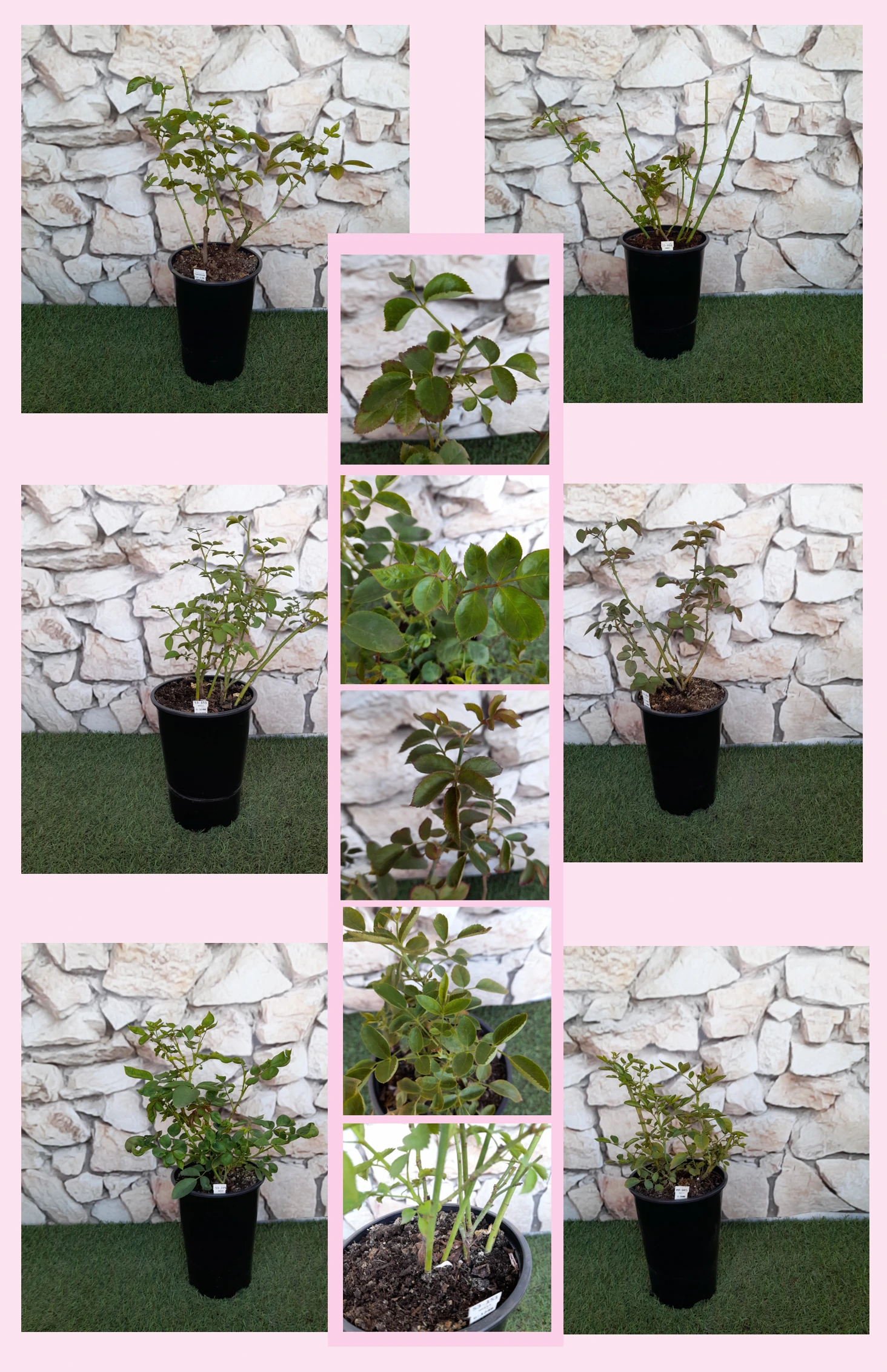
Step out to the patio for a moment of contentment and you are greeted by AMADEUS®, a ruby-red climber that turns walls and archways into living curtains of colour. Bred by Kordes and grown on its own roots, it settles in reliably and, after a simple start, rewards you with season-long flowering and a sense of easy-going charm. The semi-double, cup-shaped blooms open wide enough for visiting bees, bringing gentle movement and a light, fresh fragrance to even the smallest Dublin front garden. Its glossy dark foliage and rain-resistant petals stay smart through typical Irish showers and breezy spells, comfortably handling cool summers with repeated flushes of bloom. As an own-root rose it builds up steadily – first focusing on roots, then stronger shoots, and by the third year giving its full ornamental value with reassuring longevity. Whether you are new to roses or simply busy, AMADEUS® offers generous colour with straightforward care.
Usage options
| Target area |
Reasoning |
| House wall or sunny gable |
Perfect for training along a warm house wall where its deep-red clusters stand out against render or brick, turning a plain façade into a cottage-style feature with a long flowering season for beginners. |
| Front-garden rose arch |
Ideal over a path or gate, its remontant flowering and large clusters create a welcoming tunnel of colour through summer, giving structure and romance without demanding complex pruning from busy homeowners. |
| Pergola in a family garden |
Clothing a pergola or seating area, the plentiful second flush and mild rose scent offer a cheerful retreat, while semi-double blooms provide moderate bee interest appreciated by nature-lovers. |
| Small Dublin terrace garden |
Suited to compact city plots, it uses vertical space rather than ground area, bringing rich red blooms above bins or parking spaces and coping well even when summers are short and cool for urban gardeners. |
| Large container on patio or balcony |
Can be grown in a sturdy 40–50 litre container with a trellis, where its own-root habit and steady build-up make it a long-term feature that can be moved or refreshed more easily for renters. |
| Mixed cottage-style border backdrop |
Placed at the back of a border with perennials at its feet, it adds height and a rich red backdrop, while its dark glossy foliage frames lighter cottage plants, appealing to romantic gardeners. |
| Screening between neighbouring gardens |
Trained along tensioned wires or a sturdy fence, its dense foliage and repeat flowering provide a soft, flowery screen that feels more personal and characterful than plain panels for neighbours. |
| Informal seating or play area edge |
Used to mark the edge of a family seating space, its moderate fragrance, colour-fast petals and showy clusters bring atmosphere on damp Irish evenings, suiting relaxed, low-fuss planting for family gardeners. |
Styling ideas
- Cottage-arch – Train AMADEUS® over a metal or timber arch, underplant with Geranium macrorrhizum and lavender for a soft, scented entrance – ideal for romantic cottage-garden fans.
- Ruby-facade – Cover a sunny wall with AMADEUS® on tensioned wires, adding pots of white daisies below to highlight the rich red blooms – suited to tidy, design-conscious homeowners.
- Terrace-screen – Grow in a 50 litre trough with a slim trellis, pairing with Euonymus japonicus ‘Microphyllus’ for year-round structure – perfect for privacy-seeking city dwellers.
- Pergola-drifts – Let stems weave over a pergola and plant Potentilla neumanniana at the base for spring yellow against summer red – for families who want relaxed seasonal colour.
- Front-plot-focus – Use a single AMADEUS® as a statement climber by the door, softened with low ornamental grasses and herbs – great for low-maintenance front gardens.
Technical cultivar profile
| Characteristic |
Data |
| Name and registration |
Climbing large-flowered rose from the Klettermaxe® collection; registered as KORlabriax, marketed as Amadeus® / Klettermaxe®, ARS exhibition name Amadeus™. |
| Origin and breeding |
Bred by W. Kordes’ Söhne, Germany, by W. Kordes III; breeding and registration in 2003, introduced in 2007, with parentage recorded as unknown. |
| Awards and recognition |
Gold medals at The Hague, Geneva and Lyon International Rose Trials in 2004–2005, plus a Certificate of Merit from Bagatelle (Paris), confirming strong ornamental and garden merit. |
| Growth and structural characteristics |
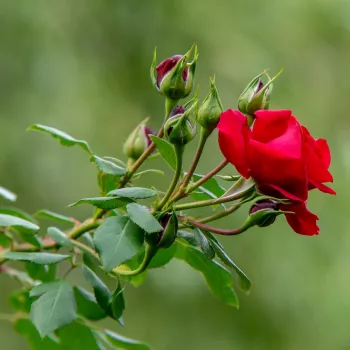
Vigorous climber reaching about 240–380 cm in height and 90–160 cm spread, with dense, glossy dark green foliage and moderate thorns; self-cleaning is only moderate in prolonged wet weather. |
| Flower morphology |
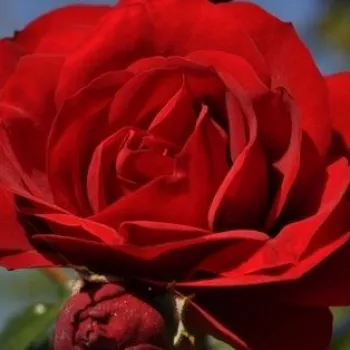
Semi-double, cup-shaped flowers, 7–10 cm across, usually in clusters; around 13–25 petals with remontant habit, providing an abundant early show followed by a generous second flush. |
| Colour data and phenology |
Deep, lustrous red blooms with velvety ruby buds; colour holds exceptionally well in sun without bluing, classified as ARS DR, RHS 53A outer petals and RHS 46A inner surfaces. |
| Fragrance and aroma |
Fresh, classic rose scent of mild to restrained intensity; semi-double form with partially open centres provides some pollen access and moderate bee attraction in mixed planting schemes. |
| Hip characteristics |
Forms spherical orange-red hips, roughly 9–15 mm in diameter, in moderate numbers; hips can add late-season interest if spent flowers are not removed after the main flowering flush. |
| Resistance and winter hardiness |
Hardy to about −26 to −23 °C (H7, USDA 5b), but with low disease resistance, particularly to powdery mildew; best grown with good air circulation and regular protective fungicide regimes. |
| Horticultural recommendations |
Suited to walls, pergolas, arches and urban green spaces; space plants 140–240 cm apart, ensure well-drained soil, tie new shoots horizontally, and prune lightly to maintain flowering laterals. |
AMADEUS® offers rich repeat flowering, reliable height and moderate bee interest on a long-lived own-root framework, making it a thoughtful choice for those planning their garden’s future.