Climbing and rambling roses

90-093-1
90-093-2

Alexander MacKenzie

Climbing rose

- – Felicitas Svejda

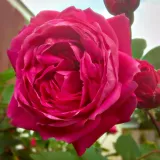
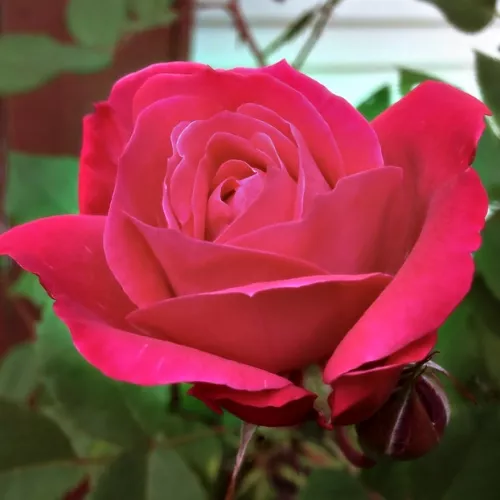
Uniform, intense raspberry-pink shade with a vivid scarlet overtone in the light. - climber, climbing rose - medium-strength, clearly scented rose - delicately fruity character

Alexander MacKenzie le bláthanna dúbailte dlútha
– Bláthanna remonta le dara tonnfhlúirseach
– Dath súilíneach sú craobh le ton scarláide
– Cumhrán torthaí mín, meán-neart, sothuigthe
– Fás díreach, tiubh, oiriúnach mar rós dreapadó
Gné speisialta: Cruas iontach suas go -37 °C, oiriúnach do gheimhreadh fuar.
Neat composition – Future-proof garden concept
Alexander MacKenzie
antoniaROSE® ORIGINAL rós i bpota 2 lítear ar a fhréamhacha féin
19,10 €
As stoc. Faoi shaothrú. Go sealadach gan fáil.
5 (6710)
facebook   twitter

ALEXANDER MACKENZIE – pink climbing rose – Svejda

If you dream of a softly lit, cottage-style corner that still looks cheerful on a wet Dublin afternoon, ALEXANDER MACKENZIE gives you generous raspberry-pink clusters that keep returning through the season, with a medium, delicately fruity fragrance. Bred in Canada for serious hardiness, it shrugs off deep winter cold while its upright, structured growth makes it easy to train on arches, railings or a boundary trellis for neat, future-proof screening. As an own-root plant, it is designed for long-term longevity in family gardens, quietly rebuilding from the base if stems are damaged, so it copes well with exposed sites where soft light moves across damp leaves and breezes bring hints of Atlantic salt. Over time you will see a natural rhythm: the first year mostly building roots, the second year showing stronger shoots, and by the third year settling into its full ornamental presence.


Usage options

Target area Reasoning
Cottage-style house wall or trellis Use its upright, climbing habit to frame windows, porches or a sunny gable, creating a soft raspberry-pink backdrop that suits Irish cottage architecture without demanding intricate pruning, ideal for the relaxed weekend gardener.
Dublin terraced front garden boundary Trained along railings or a slim trellis, it offers vertical screening and a composed, architectural line that keeps a small front garden feeling ordered rather than overgrown, especially appreciated by style-conscious urban homeowners.
Feature arch on a family path Its repeat-flowering clusters and medium fruity scent turn a simple path into a short, uplifting walk, even in light rain, adding everyday pleasure for those wanting a gentle sensory experience as busy commuters.
Mixed border with perennials Pair with low, reliable companions like lilyturf or Japanese spurge to keep the base tidy while the rose provides height and colour, suiting gardeners who favour long-lived, coordinated planting schemes as thoughtful planners.
Wind-exposed, cold-prone spots Its breeding for very low temperatures makes it a reassuring choice where winter can be harsh or sites are a little bleak, giving structure that endures from year to year for climate-aware buyers.
Long-season flower display near seating Position by a bench or small patio and enjoy the remontant, abundant second flush, so you see colour from early summer well into the season despite Ireland’s shorter summers, rewarding time-pressed outdoor relaxers.
Family garden “girly” corner Its rich raspberry-pink, almost fuchsia tones bring a playful, romantic mood that pairs beautifully with soft groundcovers and bellflowers, ideal for creating a charming nook valued by imaginative young gardeners.
Large container on a balcony or small terrace In a 40–50 litre container with good drainage, it becomes a vertical accent that suits smaller spaces, where strong roots and a steady structure help it cope with variable rainfall and breezes appreciated by compact-space gardeners.

Styling ideas

  • Cottage-Arch – Train over a slim arch with Dalmatian bellflower at the base, creating a storybook entrance that fits naturally in small Irish cottage gardens – perfect for romantic-minded families.
  • Terrace-Screen – Use along terrace railings with evergreen Japanese spurge to give year-round structure and colour harmony – ideal for privacy-seeking city residents.
  • Berry-Raspberry – Combine its raspberry-pink blooms with cool lilac and white perennials for a soft, “girly” colour palette – suited to playful front-garden creators.
  • Structured-Hedge – Plant at wider spacing as a loose flowering hedge, letting each plant form an upright, clearly defined shape – good for low-fuss boundary planners.
  • Patio-Column – Grow in a large 50 litre pot with a slim obelisk to form a movable flower column – attractive for flexible, rental-garden stylers.

Technical cultivar profile
Parameter Data
Name and registration Alexander MacKenzie climbing rose, shrub-climber group, trade name ALEXANDER MACKENZIE – pink climbing rose – Svejda, ARS exhibition name A. Mackenzie, collection: Climbing rose.
Origin and breeding Bred by Felicitas Svejda in Canada from ‘Queen Elizabeth’ × (‘Red Dawn’ × ‘Suzanne’), introduced and registered in 1985 by Agriculture and Agri-Food Canada, Ottawa.
Growth and structural characteristics Upright climbing shrub, 180–300 cm high, 150–250 cm spread, dense mid-green glossy foliage, moderately spiny canes, weak self-cleaning so spent blooms may need removing.
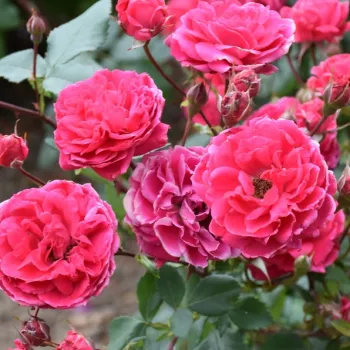
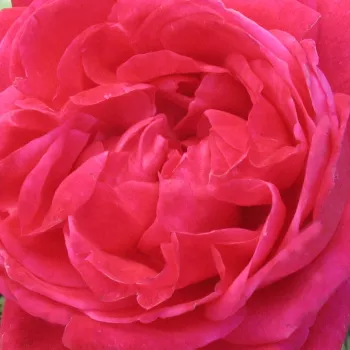
Flower morphology Very double, globular to pompon clusters, medium-sized 4–7 cm blooms, 40+ petals, remontant with a strong second flush, mainly cluster-flowering on well-ripened lateral shoots.
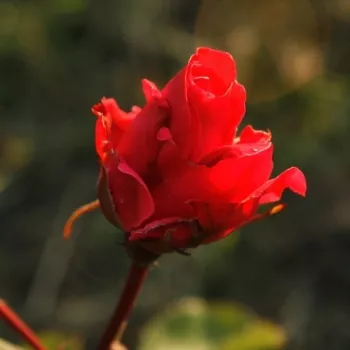
Colour data and phenology Intense raspberry-pink with scarlet overtones; buds dark carmine-crimson, fading in strong sun towards softer pink; RHS 53A outer, 46B inner; colour shows cool purplish tones in shade.
Fragrance and aroma Medium-strength scent with a clear but delicate fruity character, noticeable on still, mild days; primarily ornamental rather than for cutting, yet pleasantly perfumed near seating areas.
Hip characteristics Occasional ovoid orange-red hips, around 15–25 mm in diameter, forming after good pollination when deadheading is reduced, adding a discreet late-season accent for wildlife interest.
Resistance and winter hardiness Very hardy to about −37 to −34 °C, RHS H7, Swedish zone 6, USDA 3b; heat tolerant with watering; disease resistance low, needing regular protection against mildew, black spot and rust.
Horticultural recommendations Best in sunny sites, spaced 140–220 cm; prefers well-drained soil with mulch to protect roots; own-root form suits long-term structures, though routine cleaning of spent blooms is advised.

ALEXANDER MACKENZIE offers rich raspberry-pink flowering, strong winter hardiness and graceful vertical structure, while the own-root form supports long-term reliability in your garden, making it a considered choice for enduring planting.

Detailed product attributes

Product Identification Data

Product Name: ALEXANDER MACKENZIE – pink climbing rose - Svejda
Product Type: antoniaROSE® ORIGINAL - rós i bpota 2 lítear ar a fhréamhacha féin
Cultivar Authenticity: Cigireáilte:29.04.2025
Cultivar Merit Rating: premium silver
Item Number: [1443] 90-093 (14.02.2026) antoniarose.ie

Name and Registration

Cultivar Name Meaning: The name honours Sir Alexander Mackenzie, a Scottish–Canadian explorer who was the first to reach the Pacific Ocean by crossing the North American continent.
Synonym Name: A. Mackenzie
Original Commercial Cultivar Name: Alexander MacKenzie
Trade Name: Alexander MacKenzie Climbing rose Svejda
Rose Group: Climber, Shrub
Commercial Type: climber, climbing rose
Commercial Group: Rós dreapadó
Exhibition Category: shrub rose
Collection: Climbing rose

Origin and Breeding

Initial Distributor: Agriculture and Agri -Food Canada (Canada)
Breeder: Felicitas Svejda
Breeding Company / Institution: Agriculture and Agri-Food Canada, Central Experimental Farm (Ottawa)
Breeding Year: -, 1985
Parentage: ‘Queen Elizabeth’ × (‘Red Dawn’ × ‘Suzanne’)

Growth and Structural Characteristics

Height: 180-300 cm
Spread: 150-250 cm
Growth Habit: upright
Foliage: The variety has dense foliage. Its leaves have a glossy surface and a mid-green shade.
Prickliness: moderately spiny
Self-Cleaning Description: The majority of spent flowers remain on the plant and require subsequent cleaning.

Self-Cleaning Intensity: Self-cleaning: weak

Flower Morphology

Flower Fullness: very double-flowered
Flower Form: globular, pompon
Flower Size: M (4 -7 cm)
Inflorescence Type: cluster-flowered
Colour Code: ARS code: RB RHS code: 53A (outer), 46B (inner)
Repeat Flowering: Remontant and produces an abundant second flowering.

Colour Data and Phenology

Colour: pink
Flower Colour: Uniform, intense raspberry-pink shade with a vivid scarlet overtone in the light.
Closed Bud: Dark carmine–crimson, velvety texture, with a deeper tone at the edge.
Freshly Opened Flower: Rich fuchsia–raspberry-pink centre, with a fuller inner tone and a slightly darkening carmine outer rim.
Full Bloom: Uniform mid-deep raspberry pink, the outer petal whorl is in places more burgundy, with a cool purplish tone in shade.
Pre-Fading Flower: The crimson shade softens and lightens, fading to a raspberry-pink with a fine powdery bloom.
Colour Fading Description: In strong sunlight the deep red shade may lighten to pink.

Fragrance and Aroma

Fragrance Strength: medium-strength, clearly scented rose
Fragrance Character: delicately fruity character
Pollinator Attraction: Double (26–39‑petalled) flowers have limited appeal to pollinators because the full flower form restricts stamen accessibility, reducing their attractiveness.
Pollinator-Friendly Rating: Double (26–39 petals) flowers partially cover the stamens, so its pollinator-friendliness is limited and it is primarily an ornamental variety.

Rose Hip Characteristics

Rose Hip Colour: orange-red
Rose Hip Notes: Occasionally produced, 15–25 mm in diameter, ovoid, orange-red rose hip.

Resistance and Hardiness

Hardiness (°C): -37–-34 °C
Heat and Drought Tolerance Description: Tolerates heat well; requires watering during prolonged dry spells.
Disease Resistance: very susceptible
  • powdery mildew – very susceptible
  • black spot – very susceptible
  • rust – very susceptible

Horticultural Recommendations

Recommended Spacing: 140 cm for mass planting, 140 cm for hedging, 220 cm as a specimen
Planting Density: in square planting 0,5 plants/m², in hexagonal arrangement 0,6 plants/m²
Partial Shade Tolerance: Preferably for sunny locations
Maintenance Requirements: High; low disease resistance, regular plant protection required.
Key Uses: park, specimen, hedging, climbing, urban green space, border

Notes

Strengths: Neat composition – Future-proof garden concept
Companion Plants: Campanula portenschlagiana - Dalmatian bellflower Liriope muscari - lilyturf Pachysandra terminalis - Japanese spurge
Note: -
ALEXANDER MACKENZIE – pink climbing rose - Svejda
Uniform, intense raspberry-pink shade with a vivid scarlet overtone in the light. - climber, climbing rose - medium-strength, clearly scented rose - delicately fruity character
Ordú rósanna ar líne - climber, climbing rose - Alexander MacKenzie - pink - (180-300 cm)
Bláthaireacht: cluster-flowered airde: 180-300 cm Cruth na bláthanna: globular, pompon Friotaíocht gheimhridh: 4b pink - Agriculture and Agri -Food Canada (Canada) climber, climbing rose - Méid an bhlátha: M (4 -7 cm) Méid an bhlátha: M (4 -7 cm) - airde: 180-300 cm airde: 180-300 cm - Líon bláthanna: very double-flowered Alexander MacKenzie - Rósanna sa ghairdín | antoniaROSE® Original - premium silver Felicitas Svejda

Léirímid cuma sheachtrach ár rósanna atá le ceannach ar líne ónár siopa gréasáin.


Which product type is right for you?


Information

In what condition do we send the roses from our online shop?

Let us ask ourselves the question: What do I want to use the rose for?
Flower? – Location? – Screening? – Fragrance? – Height? – Breeder? – Rose hips?

Rose purchase information
Payment methods – Delivery costs – Delivery – Complaints handling

Care guide

Our product is a rose grown with unique pharmaROSA® cultivation technology!

2 litre, own-root, potted rose.
With shoots appropriate to the season.
With roots thoroughly interwoven through the growing medium.
Quality in line with the requirements of the E.N.A. (European Nurserystock Association).
In unique packaging that prevents damage.
Can be planted during frost-free periods.
True-to-type rose plant with an individual identifier.

The pharmaROSA® own-root potted rose is a well-rooted plant that supports reliable establishment when planted and cared for properly, so it can be planted whenever the soil is not frozen.


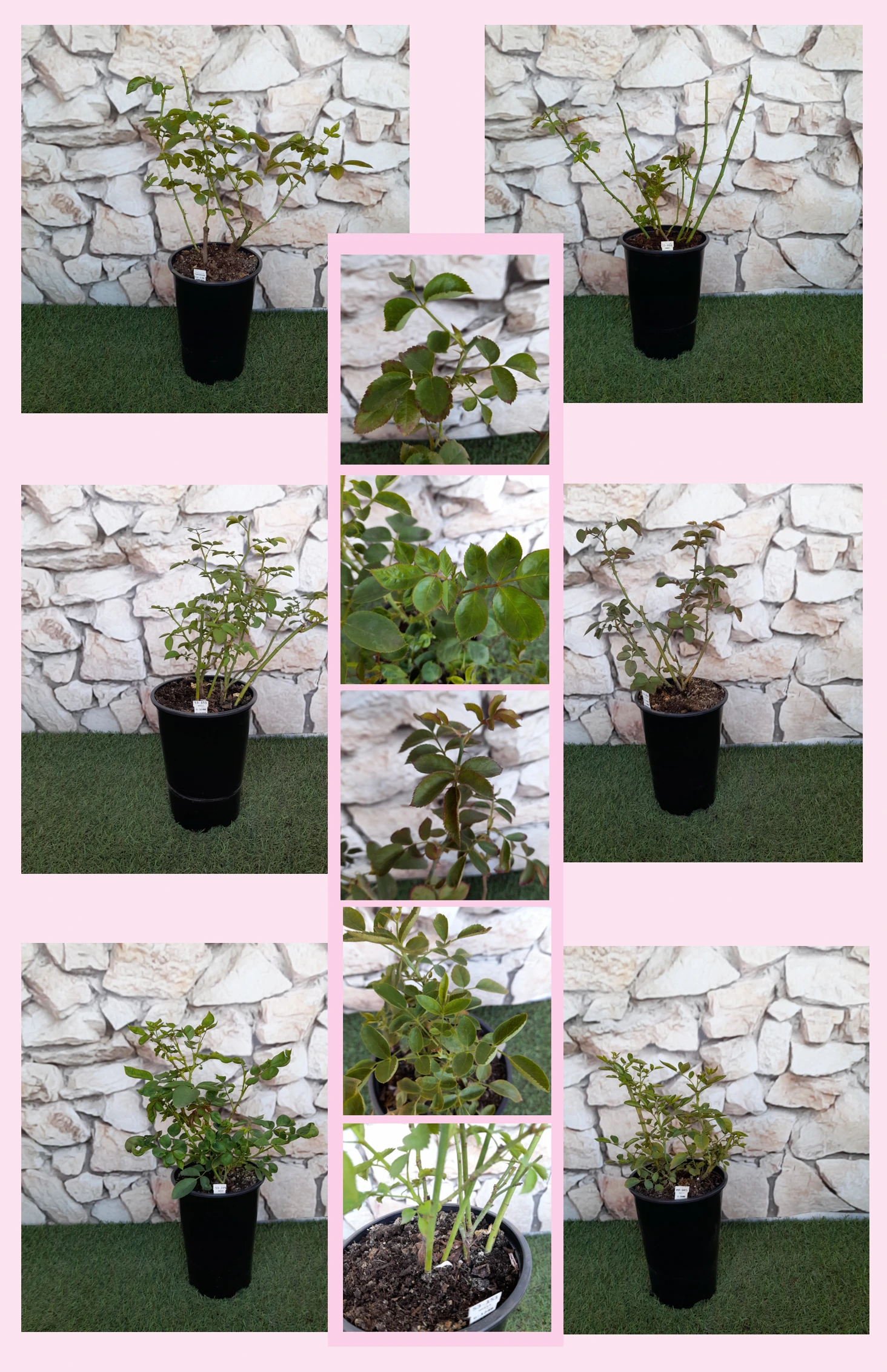
Stock: several varieties and several stages of development in a short stock section.
Shoot system: intensive growth of fresh basal shoots on a young plant.
Root system: presentation of the strong root system interwoven through the growing medium with the pot removed.
Balance: mature plant where the development of the root system and the shoots is in harmony.

Information about the videos
The video series is not a “seasonal showcase”, but makes the essence of pharmaROSA® own-root production tangible: how the plant is built, what the root system is like and how the shoots renew themselves. The footage was therefore taken at different times, showing plants at different stages of development, so mixed leaf coverage or differing growth stages may appear in the videos. This is not a “sample” of the batch delivered, but an illustration of how the technology works. The current condition of the rose available to order — typical of the given period and similar to what you can expect to receive in the parcel — is shown at the top of the product page.

pharmarosa.atpharmarosa.compharmarosa.depharmarosa.ropharmarosa.sipharmarosa.skpharmarosa.hrpharmarosa.itpharmarosa.frpharmarosa.grpharmarosa.bepharmarosa.dkpharmarosa.nlpharmarosa.iepharmarosa.plpharmarosa.lupharmarosa.ptpharmarosa.espharmarosa.bgpharmarosa.ltpharmarosa.sepharmarosa.lvpharmarosa.eepharmarosa.fipharmarosa.rudarinarose.co.ukpharmarosa.cz

Cineálacha táirgí

Pages for private customers
Garden roses for the family garden, with minimal care  → ORIGINAL®
Premium garden roses – instant impact, a truly showpiece garden  → EXTRA®
Pages for professionals and private customers
Roses for public spaces – large areas, sustainable maintenance  → NATURAL®
Roses for projects – hedge and row planting, fast implementation  → RAPID®
For professional partners only
Production – propagation material for garden roses, wholesale  → NEONATAL®

Sonraí cuideachta

PharmaRosa Ltd.
Company registration number: 01-09-717479
VAT number: 13075314-2-43
Plant health registration no.: HU130721
Bank account (IBAN):
HU85117631891388688400000000
BIC (SWIFT): OTPVHUHB
Bank name: OTP Bank Nyrt.